

Fiber Optic Adapter-Optical Passive Components
Fiber optic adapters, also known as optical connectors, are among the most widely used passive components in fiber optic communication systems. Typically, they consist of two fiber connectors and a coupling sleeve that aligns and joins them together.
1-Fiber Optic Adapter Features
- Low insertion loss, each connection loss through an adapter is less than 0.2db
- Good interchangeability
- Good repeatability
2-Fiber Optic Adapter Product Concept
Fiber optic adapters allow the connection of fiber connectors with different interface types, enabling conversion between FC, SC, ST, LC, MTRJ, MPO, E2000, and others. They are widely used in optical distribution frames (ODFs), fiber optic communication systems, and testing instruments due to their excellent performance and high reliability. Although some refer to fiber adapters as fiber connectors, the two are actually distinct components.
Each fiber connector is attached to the end of a fiber pigtail, while the adapter’s coupling sleeve ensures precise alignment between the connectors. Additionally, most adapters come equipped with metal or plastic flanges to facilitate secure mounting during installation.
3-Fiber Optic Adapter Key Features
Fiber connections are achieved through adapters that utilize internal alignment sleeves to ensure optimal performance between mated fiber connectors. To allow secure mounting on various panels, a range of precisely designed flange options is available.
Hybrid adapters can join fiber connectors with different interface types and support connections with APC-polished end faces. Duplex and multi-port adapters are also offered to increase installation density and conserve valuable space.
4-Fiber Optic Adapter Product Type
Fiber Adapter and Connector Overview
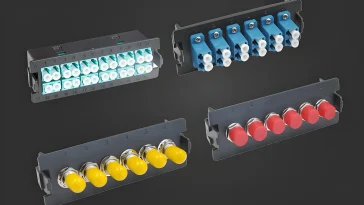
Fiber optic adapters serve as transition components that align and connect fiber connectors of varying types. They are compatible with multiple connector models such as FC, SC, ST, LC, MTRJ, and E2000, and support end-face finishes like PC, UPC, and APC.
-
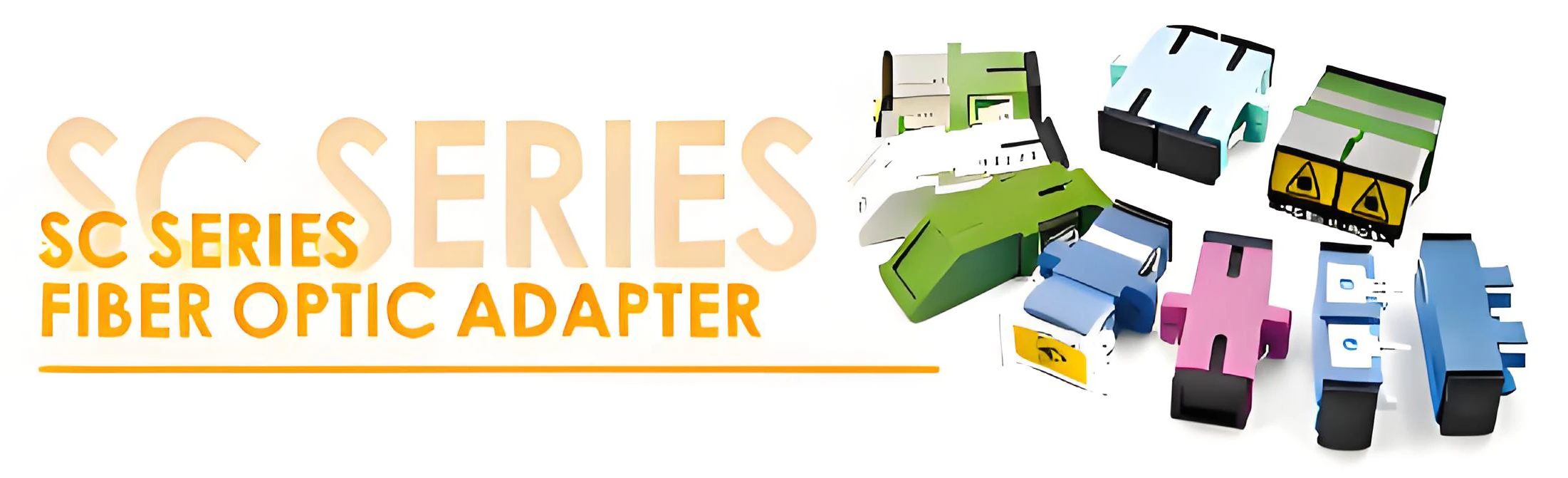
“SC” stands for “Standard Connector”, designed with a square plastic body, known for its high-temperature resistance and anti-oxidation properties. It is commonly used on the device side.
-
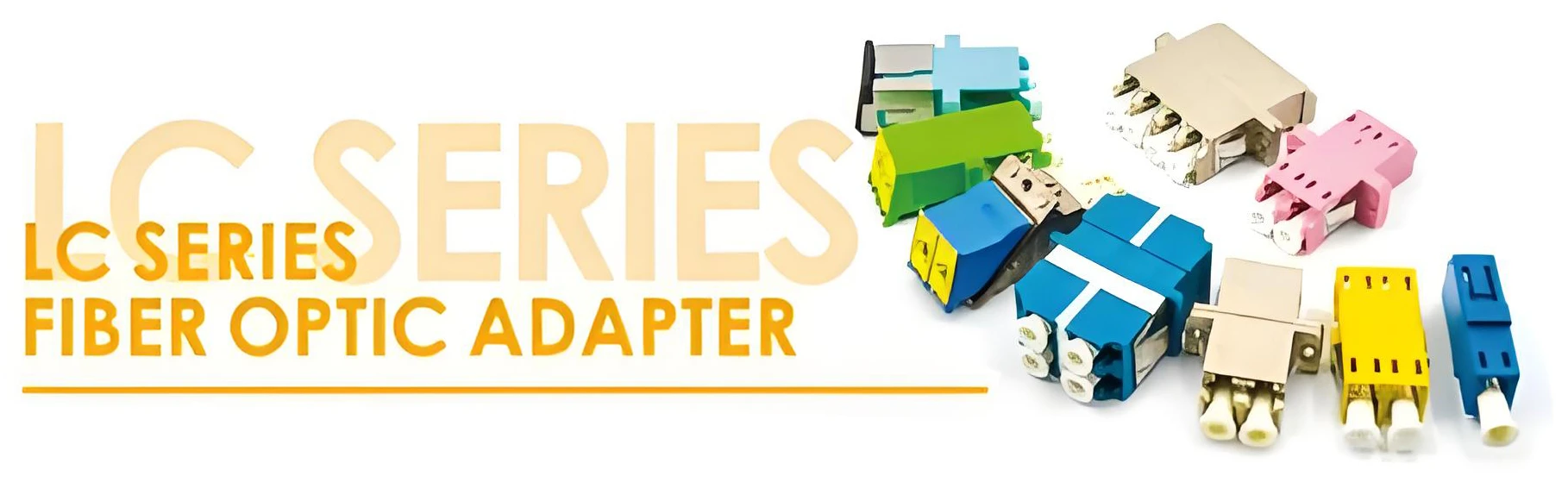
“LC” is similar in design to SC but is more compact, making it suitable for high-density installations.
-
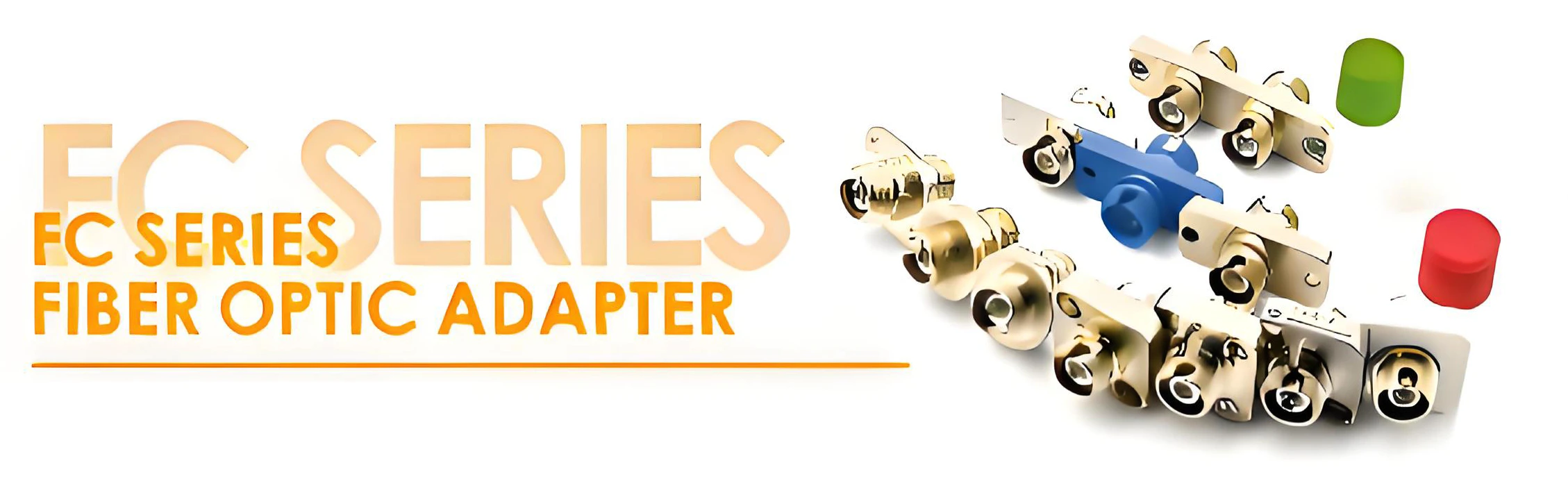
“FC” stands for “Fiber Connector”, featuring a threaded metal housing, often used on the patch panel side. The metallic structure allows for a higher number of mating cycles compared to plastic variants.
Although some vendors refer to adapters as connectors, they are technically distinct. A connector terminates the fiber, while the adapter joins two connectors.
Internally, adapters use precision alignment sleeves to ensure maximum connection performance between two fiber ends. The sleeves may be accompanied by flanges—metallic or plastic—for easy mounting on distribution panels. Hybrid adapters allow interconnection between different connector types and support APC-polished interfaces. Duplex or multi-port versions enhance port density and conserve rack space.
Connector Interface & End-Face Geometry
Fiber connectors are categorized by connector type and end-face geometry:
-
The prefix (e.g., SC, FC) indicates the connector type.
-
The suffix (e.g., PC, UPC, APC) refers to the polishing style of the ferrule.
-
PC (Physical Contact) is most commonly used in telecom applications and features a flat contact surface.
-
UPC (Ultra Physical Contact) offers lower insertion loss than PC and is typically used in equipment requiring tighter tolerances, such as FC/UPC jumpers in high-performance ODFs.
-
APC (Angled Physical Contact) uses an 8° angle cut to reduce back reflection. It is commonly applied in analog optical systems such as CATV, where signal quality is affected by reflected light. The angled polish ensures that any reflected light does not return along the same path, minimizing ghosting in video transmission.
Connector Classification by Media, Shape, and Performance
Fiber connectors are critical passive components that enable detachable connections between two fiber ends. Their role is to ensure precise fiber alignment to maximize optical power transfer and minimize connection loss, directly affecting the performance and reliability of fiber transmission systems.
-
By Transmission Medium: Connectors may support single-mode or multimode silica fiber, or polymer-based fibers.
-
By Connector Shape: Common types include FC, SC, ST, LC, D4, DIN, MU, MT, among others.
-
By End-Face Style: Options include flat (PC), spherical (UPC), and angled (APC).
-
By Core Count: There are single-fiber and multi-fiber connectors, such as MT-RJ.
Different connectors serve specific roles:
-
ST is typically used on patch panels and modules.
-
SC and MT connectors are often found on active equipment.
-
LC is widely used in high-density applications.
-
FC is common in legacy systems and ODFs.
Common Connector Types
-
FC Type: Developed by Japan’s NTT, the FC (Ferrule Connector) uses a screw-thread mechanism and a ceramic ferrule. Initially flat-ended, later versions adopted PC polishing for better insertion and return loss. Though simple and reliable, FC is sensitive to dust and may have higher reflectance.
-
SC Type: Also from NTT, the SC connector features a square plastic housing with a push-pull latch mechanism. It uses PC or APC polishing and provides low-cost, high-performance connectivity with easy installation and minimal signal variation.
-
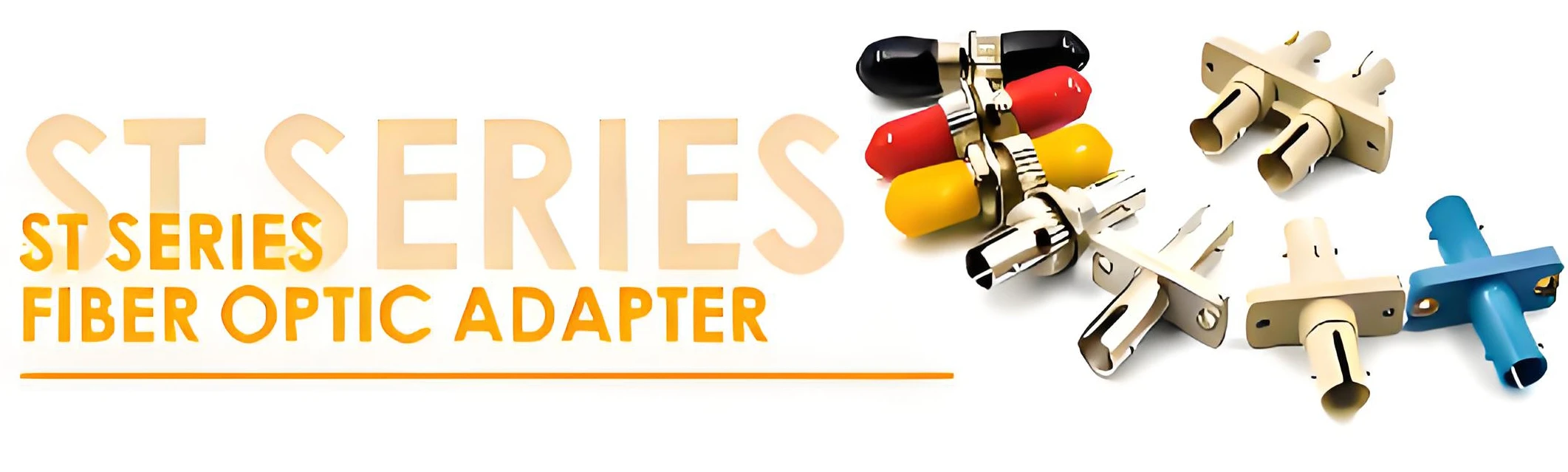
ST Type: Popular in older 10BASE-F networks, the ST connector uses a bayonet-style coupling. The fiber core is exposed, unlike SC where it is recessed.
-
DIN 47256: A German-designed connector similar in size to FC, but includes internal springs to control insertion pressure, protecting the end-face and offering superior mechanical precision.
-
MT-RJ: Based on the MT connector developed by NTT, it resembles an RJ-45 and uses a dual-core ferrule with guide pins, ideal for high-density, short-distance LAN applications.
-
LC Type: Designed by Bell Labs, LC is a small form-factor connector using a 1.25 mm ferrule—half the size of SC/FC. It uses a latch mechanism like RJ ports and is dominant in both single-mode and multimode high-density deployments.
-
MU Type: Also developed by NTT, the MU (Miniature Unit) connector is one of the smallest single-core connectors in use today. It uses the same 1.25 mm ferrule as LC but supports even higher density. Variants include board-mounted, cable-mounted, and simplified versions for LD/PD modules. Demand for MU connectors continues to grow with the rise of DWDM and high-bandwidth applications.
5-Fiber Optic Adapter Application
- Fiber optic communication system
- Cable television network
- Local area network, optical area network
- Fiber to the home (FTTP)
- Video transmission
- Test equipment
 No products in the cart.