

Fiber Optic PLC Splitter(Planar Lightwave Circuit Splitter)
PLC optical splitter (Planar Lightwave Circuit Splitter) is an integrated waveguide optical power distribution device based on a quartz substrate, and is a passive device in an optical fiber link. It is mainly used in passive optical networks (EPON, GPON, etc.) and fiber-to-the-home (FTTH) systems to achieve split transmission of optical signals between the central office and the terminal equipment.
The device consists of a splitter waveguide chip and an input/output optical fiber array on a quartz substrate, and is manufactured using semiconductor processes (photolithography, etching, etc.). The packaging forms include ABS box type, plug-in type, rack type, etc., and are suitable for installation scenarios such as optical cable junction boxes and cabinets. It has good splitting uniformity and is insensitive to wavelength. It supports 1×N and 2×N structures, and the number of splits can reach up to 128. The core performance indicators include insertion loss (3.5~24.0dB), splitting ratio and polarization-dependent loss (≤0.5dB), and the operating wavelength covers 1260~1650nm [2]. The splitting ratio of the product must be customized according to the transmission wavelength and comply with international standards such as Telcordia GR-1209/1221.
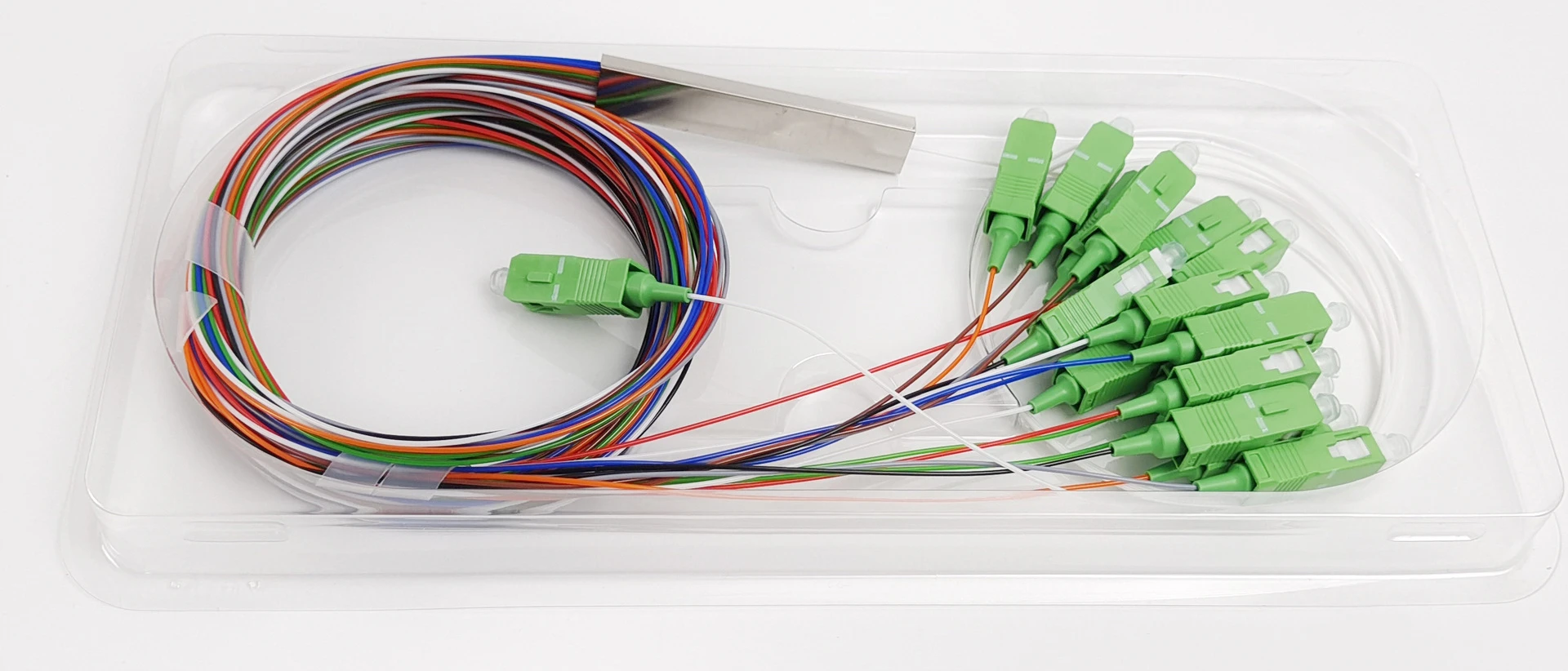
PLC Introduction
It is one of the key passive components in optical fiber links. This optical fiber distribution device features multiple input and output ports and is especially suitable for passive optical networks (such as EPON, GPON, BPON, etc.), where it connects central offices to end-user equipment and enables the splitting of optical signals.
PLC Category
Bare fiber type, micro (steel tube/module) type, ABS box type, with splitter type, tray type, plug-in type, rack type…
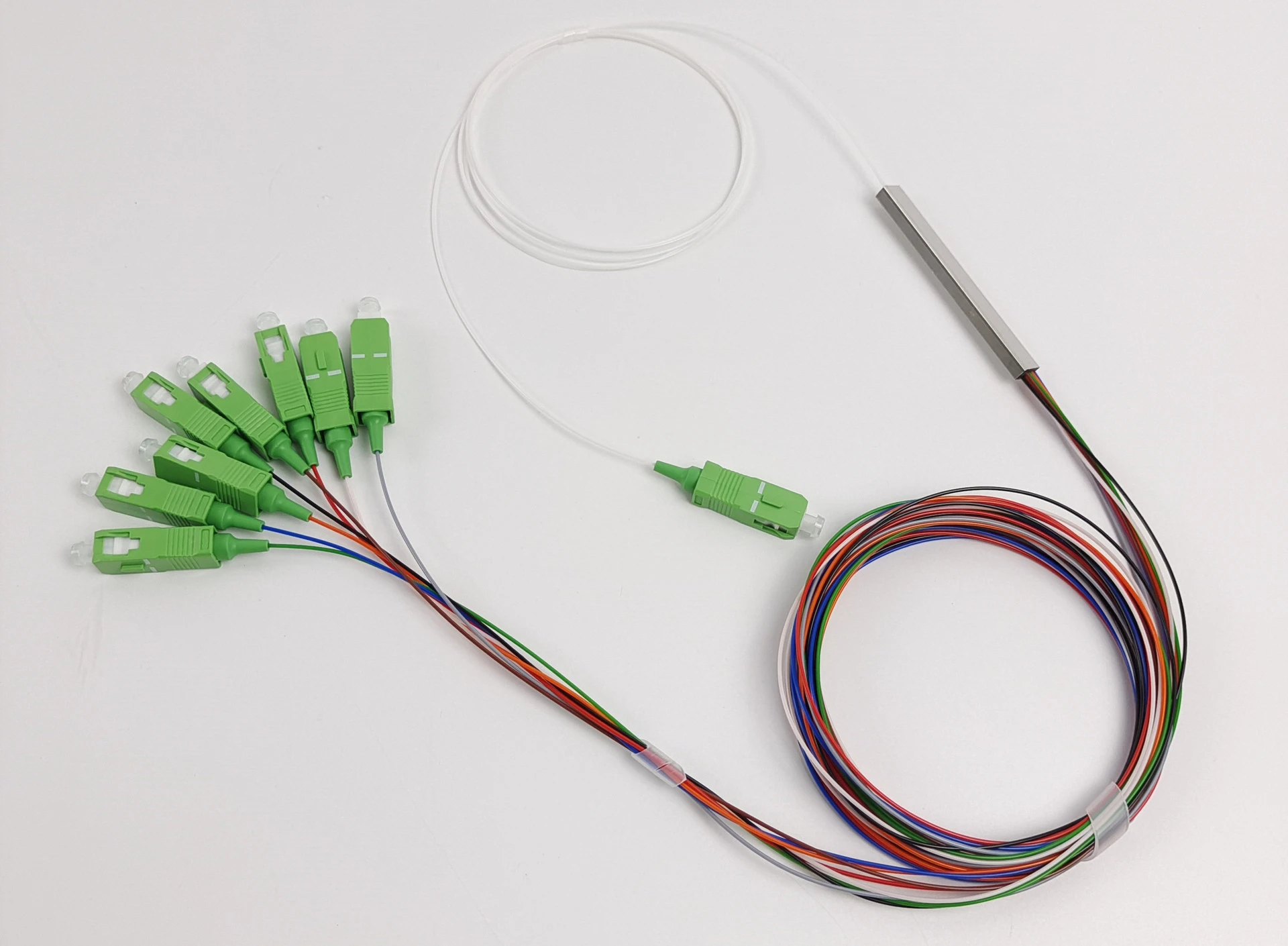
PLC Application
Rack-mounted:Installed in a 19-inch OLT cabinet; when the optical fiber branch enters the home, the installation equipment provided is a standard digital cabinet:when the ODN needs to be placed on the table.
ABS box type:Installed in a 19-inch standard rack; when the optical fiber branch enters the home, the installation equipment provided is a cable junction box:when the optical fiber branch enters the home, it is installed in the equipment specified by the customer.
Bare fiber type:① Installed in various types of pigtail boxes. ② Installed in various types of test instruments and WDM systems.
Brancher type:① Installed in various types of optical distribution equipment. ② Installed in various types of optical test instruments.
Micro:① Installed in the optical cable joint box. ② Installed in the module box. ③ Installed in the wiring box.
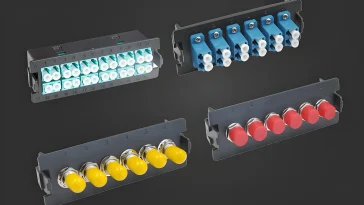
Plug-in type:This device is used for user access points that need to be split in the FTTX system. It mainly completes the termination of optical cables entering the community or building. It has the functions of optical fiber fixing, stripping, welding, jumper, and branching. After splitting, it enters the end user in the form of a home optical cable.
Tray type:Suitable for integrated installation of various types of fiber splitters, wavelength division multiplexers, etc.
Select high-quality fiber connectors and adapters with low insertion loss and high return loss;
Note:A single-layer tray can be configured with a maximum of 1:16 adapter interface, and a double-layer tray can be configured with a maximum of 1:32 adapter interface.
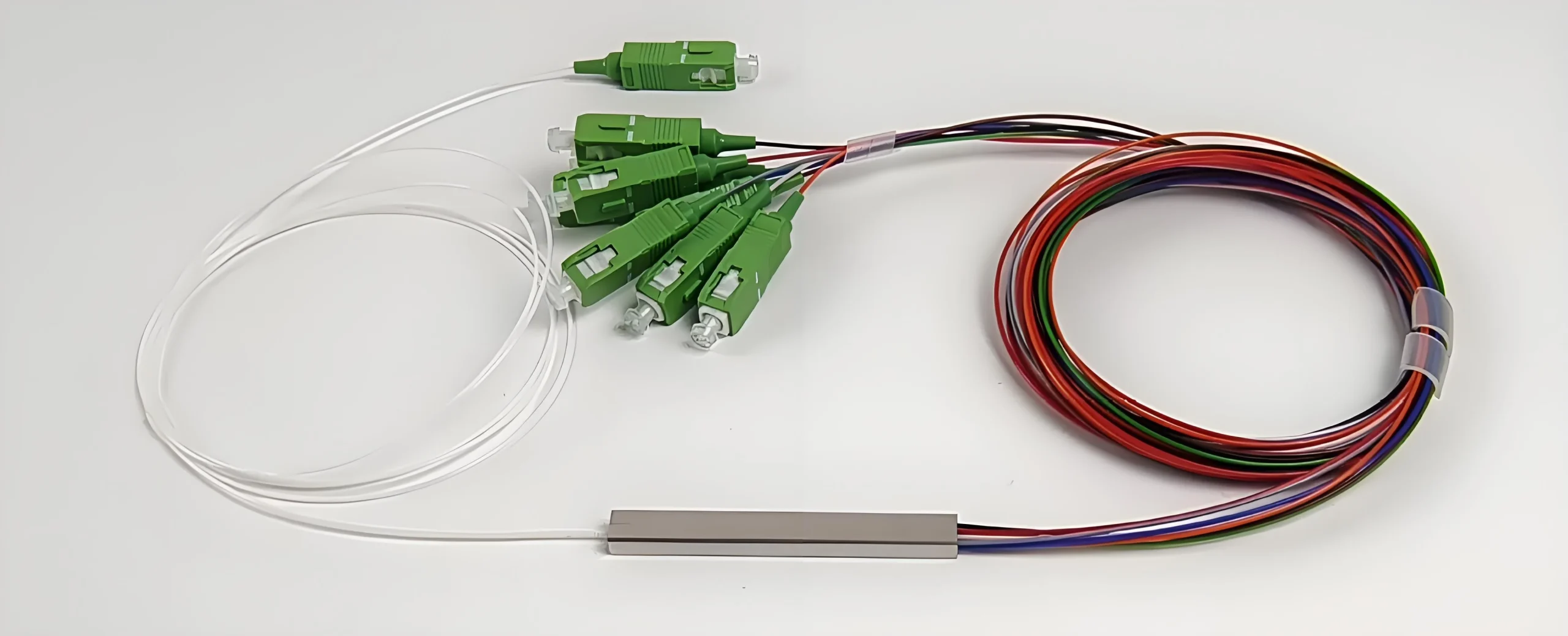
PLC Pros and Cons
Advantages
(1) The loss remains stable across a wide range of optical wavelengths, supporting the transmission of signals at various wavelengths.
(2) It ensures balanced signal division, delivering even power distribution to each user.
(3) Its compact design and small footprint allow easy integration into standard distribution boxes without requiring extra installation space.
(4) A single unit can support a high number of output channels, often exceeding 32 ports.
(5) It offers low per-channel cost, with more significant cost efficiency as the number of channels increases.
Disadvantages
(1) The fabrication process is intricate and demands advanced technology. At present, chip manufacturing is dominated by several overseas companies, and only a limited number of domestic producers can perform large-scale packaging.
(2) Compared to the fused biconical taper (FBT) type splitter, the cost is relatively higher, particularly in low-channel count applications, where it has less of an advantage.
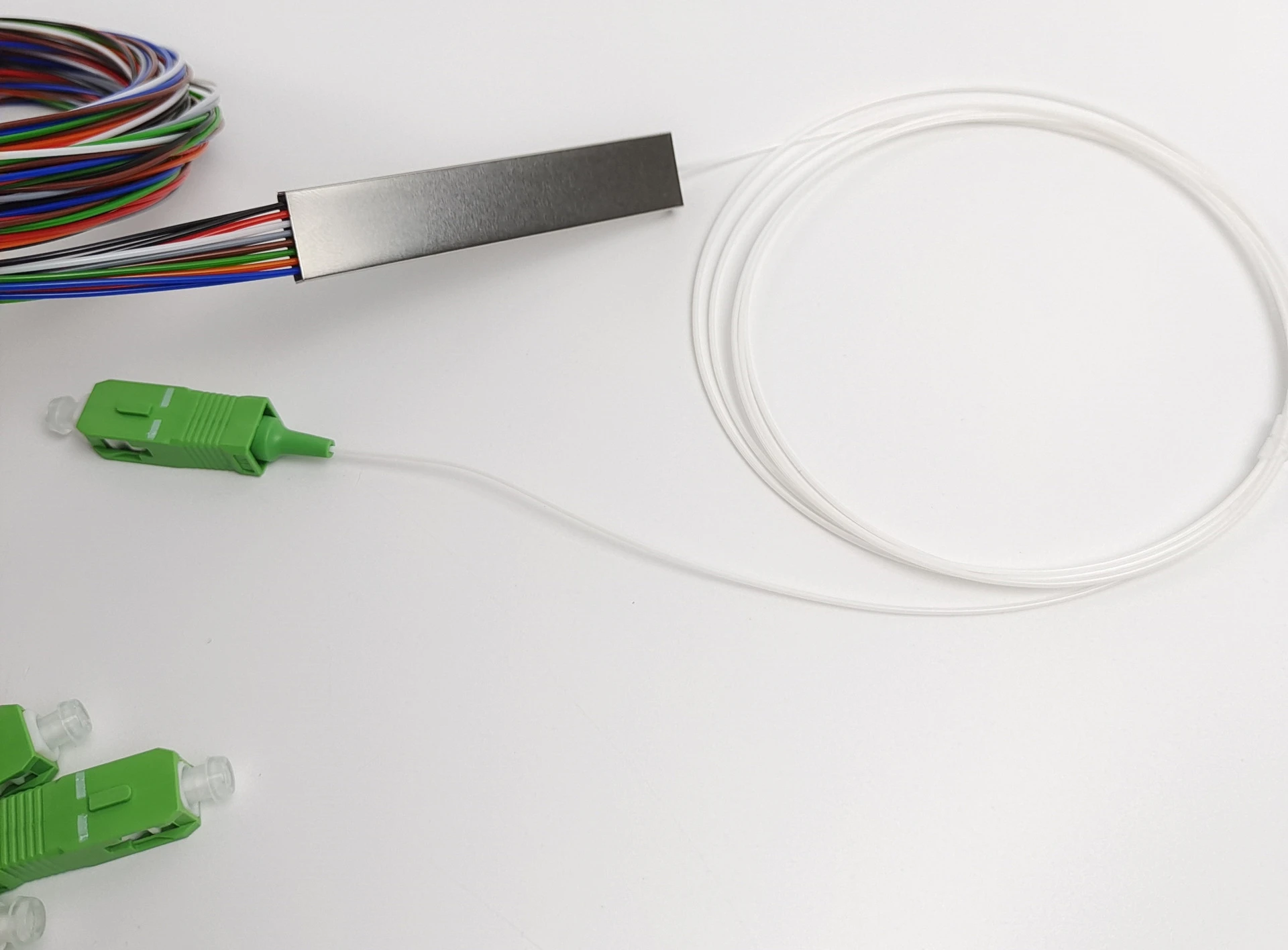
PLC Components
The inside is composed of a PLC optical splitter chip and a fiber array coupling at both ends. The chip uses semiconductor technology to grow a layer of splitting waveguide on a quartz substrate. The chip has an input end and N output end waveguides. Then the input and output fiber arrays are coupled at both ends of the chip.
The outside is composed of an ABS box and a square steel pipe, optical cable and optical fiber connector.
 No products in the cart.