

Fiber Converter-Signal conversion equipment
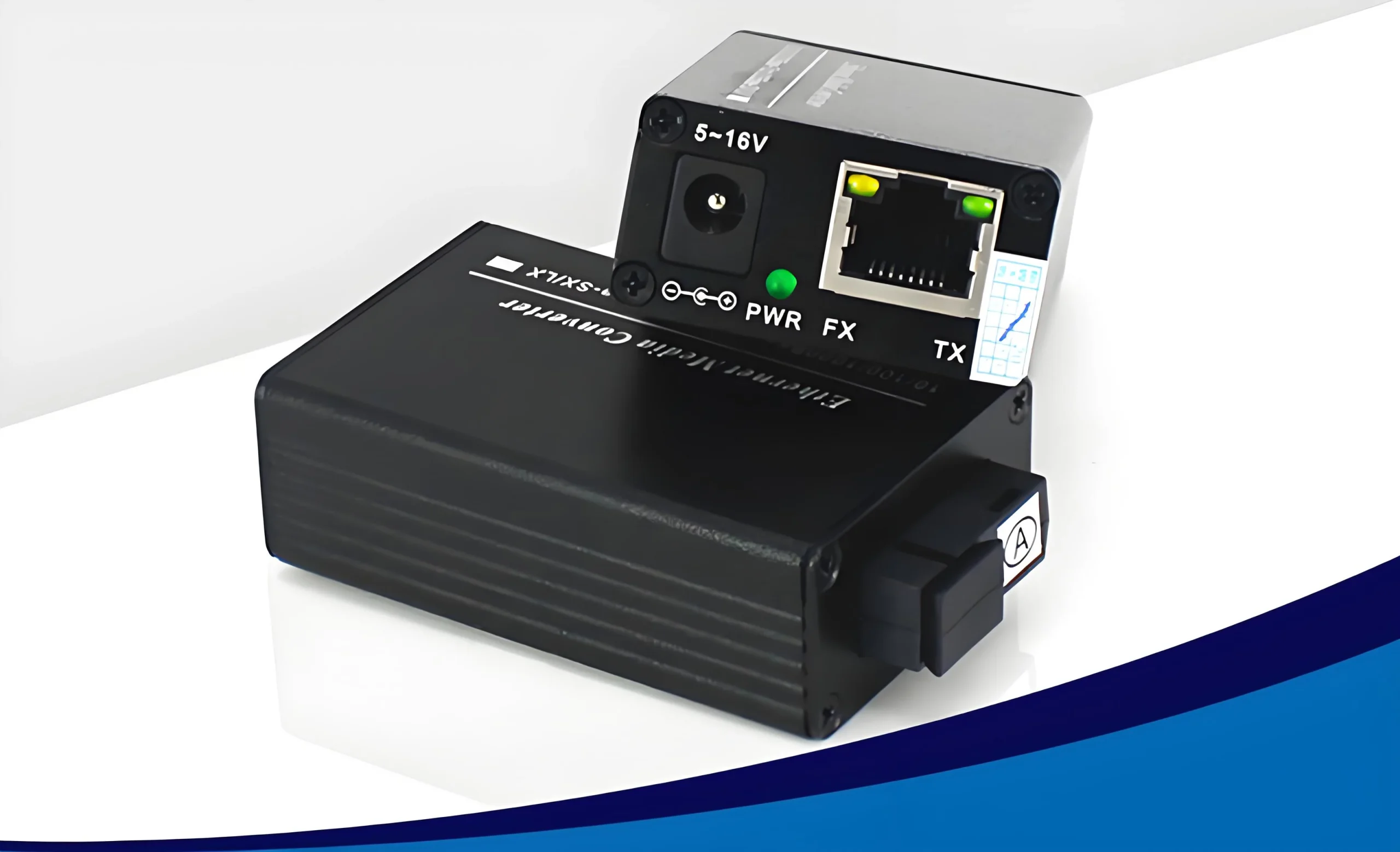
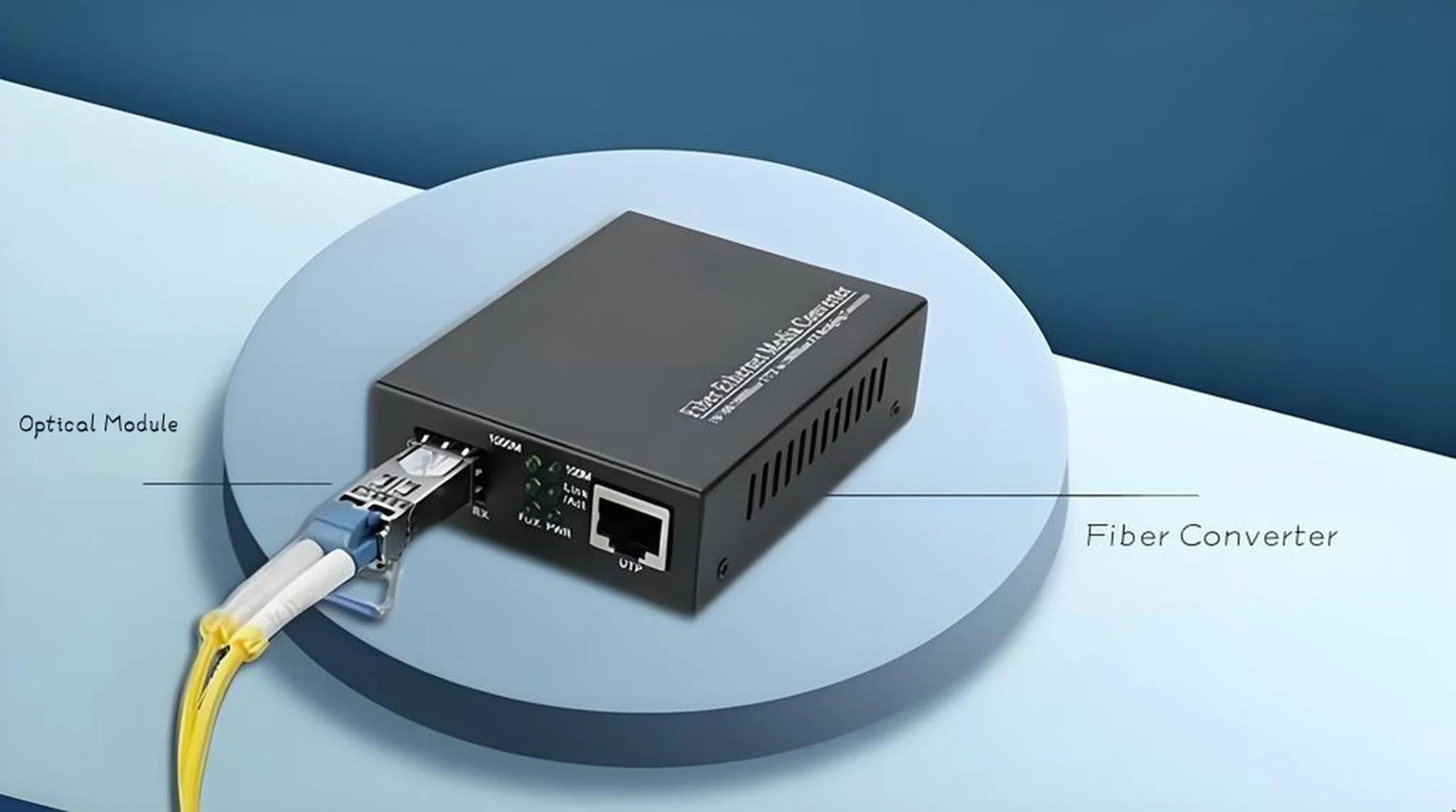
A fiber optic transceiver is a type of Ethernet media conversion device that enables the bidirectional transformation between short-range electrical signals over twisted-pair copper and long-distance optical signals. In many cases, it is also referred to as an optical-to-electrical converter or simply a fiber converter. These devices are commonly used in network environments where Ethernet cabling cannot reach and optical fiber is required to extend transmission distances. They are typically deployed at the access layer of broadband metropolitan area networks (MANs). Example applications include high-definition video transmission in surveillance and security systems. Fiber converters also play a key role in bridging the “last mile” of optical connections to the broader metro or core networks. Utilizing high-performance switching chips and large buffer capacity, fiber transceivers ensure non-blocking data throughput while supporting essential functions like traffic regulation, collision isolation, and error detection. These features provide enhanced reliability and security during data transfer, making such devices highly sought after in the market.
1 – Fiber Converter Effect
Fiber optic media converters are typically used in practical networking scenarios where standard Ethernet cables fall short and fiber is required to extend communication distances. They are especially effective in bridging the “last mile” of fiber connections to metro networks and broader infrastructures. With the use of fiber converters, users can cost-effectively upgrade systems from copper to fiber—an ideal solution for those with limited budgets, manpower, or time. The main function of a fiber transceiver is to convert electrical signals into optical signals for transmission, and then convert incoming optical signals back into electrical signals to be delivered to the receiving equipment.
2 – Fiber Converter Category
Fiber optic media converters must strictly adhere to Ethernet standards such as 10Base-T, 100Base-TX, 100Base-FX, IEEE 802.3, and IEEE 802.3u. In addition, they should comply with FCC Part 15 regulations to ensure electromagnetic compatibility (EMC) and limit radiated emissions. With major domestic telecom operators actively expanding community networks, campus networks, and enterprise infrastructures, the demand for fiber converters continues to rise steadily—supporting the growing needs of modern access network deployments.
Classification by Type
Single-mode Fiber Media Converters: Designed for long-distance transmission, typically covering ranges from 20 km to as far as 120 km.
Multimode Fiber Media Converters: Suitable for shorter distances, generally between 2 km and 5 km.
For instance, a 5 km converter typically has an output power of -20 to -14 dB, a receiver sensitivity of -30 dB, and operates at a wavelength of 1310 nm. In comparison, a 120 km unit often has a transmission power ranging from -5 to 0 dB, with receiver sensitivity around -38 dB and uses a 1550 nm wavelength.
Classification by Fiber Core
Single-Fiber Media Converters: Transmit and receive signals over a single optical fiber.
Dual-Fiber Media Converters: Use two separate optical fibers for bidirectional data flow.
As the name suggests, single-fiber models allow simultaneous data transmission and reception over just one fiber, significantly conserving fiber resources, especially in environments where fiber availability is limited. These devices commonly adopt Wavelength Division Multiplexing (WDM) technology, usually operating at 1310 nm and 1550 nm. However, due to the lack of a unified international standard, interoperability issues may arise when products from different manufacturers are connected. Moreover, because of the WDM design, single-fiber converters often experience greater signal attenuation.
Classification by Layer and Speed
100M Ethernet Fiber Converters: Operate at the physical layer.
10/100M Adaptive Ethernet Converters: Function at the data link layer.
Based on speed and functional layer, converters are available in versions such as fixed 10 Mbps, 100 Mbps, 10/100 Mbps adaptive, 1000 Mbps, and 10/100/1000 Mbps auto-negotiation models. Converters working at the physical layer handle data on a bit-by-bit basis, ensuring rapid transmission, low latency, and high throughput. They are ideal for fixed-speed connections. Since these devices bypass the auto-negotiation process before communication begins, they generally offer better compatibility and stability.
Classification by Structure
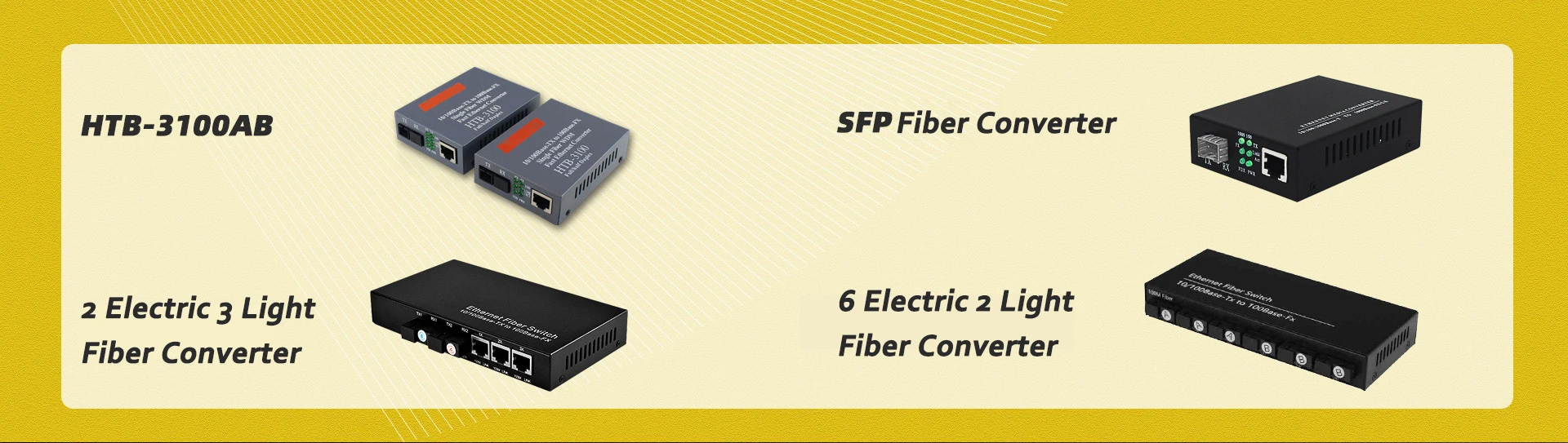
Desktop (Standalone) Converters: Independent units designed for single-user applications.
Rack-mounted (Modular) Converters: Installed in 16-slot chassis systems, powered by centralized supplies.
Structurally, converters are divided into standalone types for individual deployments, such as a single switch uplink in a hallway, and rack-mounted types suited for aggregation in multi-user environments. Most domestic racks accommodate up to 16 modular converter units.
Classification by Management Capability
Unmanaged Fiber Converters: Plug-and-play design, with DIP switches to configure electrical port modes.
Managed Fiber Converters: Support carrier-grade remote management functionality.
From a management perspective, converters are divided into managed and unmanaged categories. Increasingly, telecom operators prefer fully manageable devices across their networks. Managed converters are evolving alongside switches and routers to support remote control. Managed units may further be categorized into central-side management and customer-side management.
Centralized managed converters, usually rack-mounted, often use a master-slave structure. The main control module collects status information from all slave modules within or across racks and reports to a central management system. For example, the OL200 series by FiberHome supports a master-slave setup (1 main + 9 secondary), allowing up to 150 converters to be managed simultaneously.
At the user end, management solutions include three approaches:
A protocol runs between central and client devices to relay client status, which is processed by the central CPU and sent to the management server.
The central converter monitors the optical power on its port to determine whether issues lie with the fiber link or the client device.
A built-in CPU is added to the client device, enabling full remote monitoring, configuration, and rebooting.
While the third method offers true remote management, it also increases costs due to the extra hardware, making the first two methods more budget-friendly for many users. Nonetheless, as the demand for remote control grows, managed media converters are expected to become more advanced and intelligent.
Classification by Power Supply
Built-in Power Converters: Use integrated switching power supplies, typically telecom-grade.
External Power Converters: Employ separate AC adapters, often found in consumer-grade products.
Classification by Operating Mode
Full-Duplex Mode: Enables simultaneous two-way data transmission over separate send and receive lines. Each end contains both a transmitter and a receiver, allowing real-time bidirectional communication without switching delays.
Half-Duplex Mode: Uses a single line for both sending and receiving. While data can still flow in both directions, transmission occurs one way at a time, requiring a switch mechanism that introduces time delay during direction changes.
3 – Fiber Converter Features
Fiber optic transceivers generally include the following essential characteristics:
Enable extremely low-latency communication for efficient data delivery.
Operate independently of network protocols, ensuring full transparency during transmission.
Feature purpose-built ASIC chips that support full-speed data forwarding. These customizable chips consolidate various functions, offering simplified architecture, high dependability, low energy consumption, and optimized cost-effectiveness with enhanced performance.
Rack-mounted units support hot-swapping, allowing upgrades and maintenance without interrupting ongoing operations.
Managed models offer robust functions such as network diagnostics, firmware updates, real-time status monitoring, fault alerts, and operational controls, along with detailed system logs and alarm tracking.
Most devices incorporate dual redundant (1+1) power supply designs, support wide-range input voltages, and include auto-switching and power protection mechanisms.
Engineered to function reliably across a broad range of operating temperatures.
Compatible with a full spectrum of transmission distances, from 0 to 120 kilometers, meeting various deployment needs.
4 – Fiber Converter Advantages
When discussing fiber optic transceivers, people often compare them to switches equipped with optical ports. Below is a summary of the key advantages fiber transceivers offer over optical port switches.
To begin with, using fiber transceivers in combination with standard Ethernet switches is significantly more cost-effective than deploying optical switches. In particular, some optical switches lose one or more electrical ports when optical modules are inserted, which increases cost. By contrast, fiber transceivers can help service providers reduce their initial investment considerably.
Another notable advantage is maintainability. Since optical modules used in switches are often proprietary and lack universal standards, a damaged module must typically be replaced with one from the original manufacturer. This can complicate repairs and maintenance. In contrast, fiber transceivers have achieved strong interoperability across different brands, allowing easy replacement with equivalent products from various vendors—greatly simplifying maintenance.
Additionally, fiber transceivers offer a broader range of transmission distance options than optical switches, making them more adaptable to diverse deployment environments. Of course, optical switches have their own strengths, such as centralized power supply and unified management, but those aspects are beyond the scope of this discussion.
 No products in the cart.