

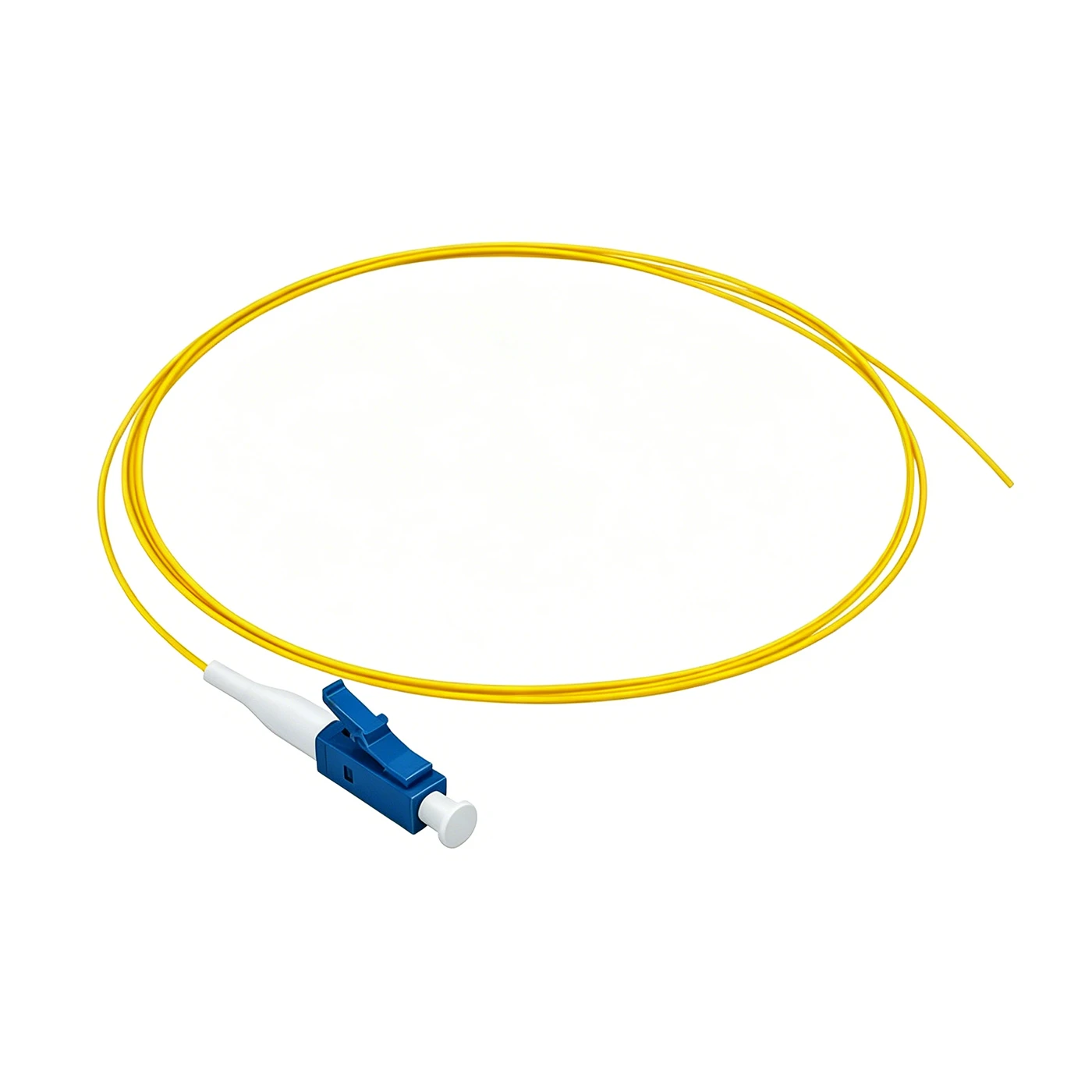
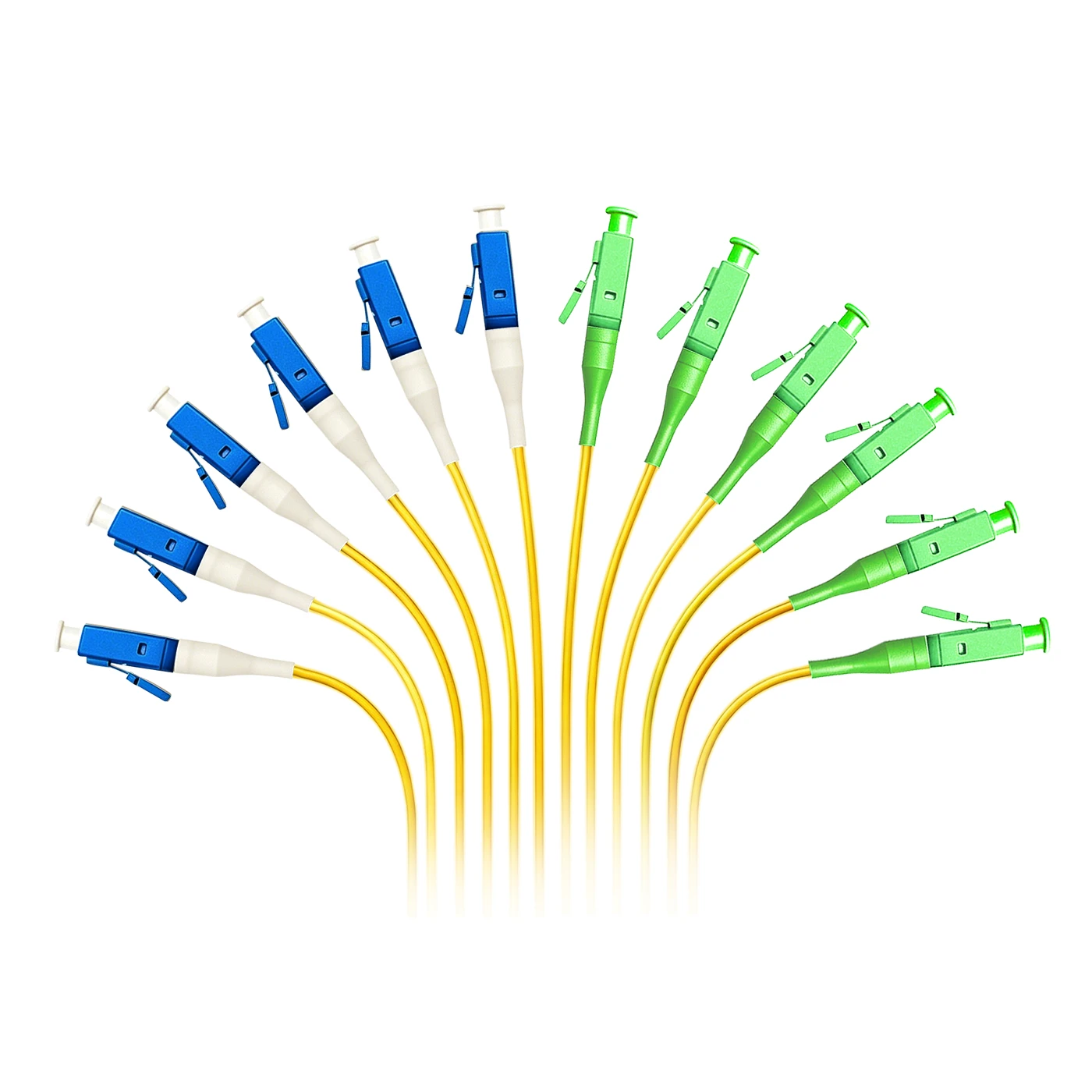
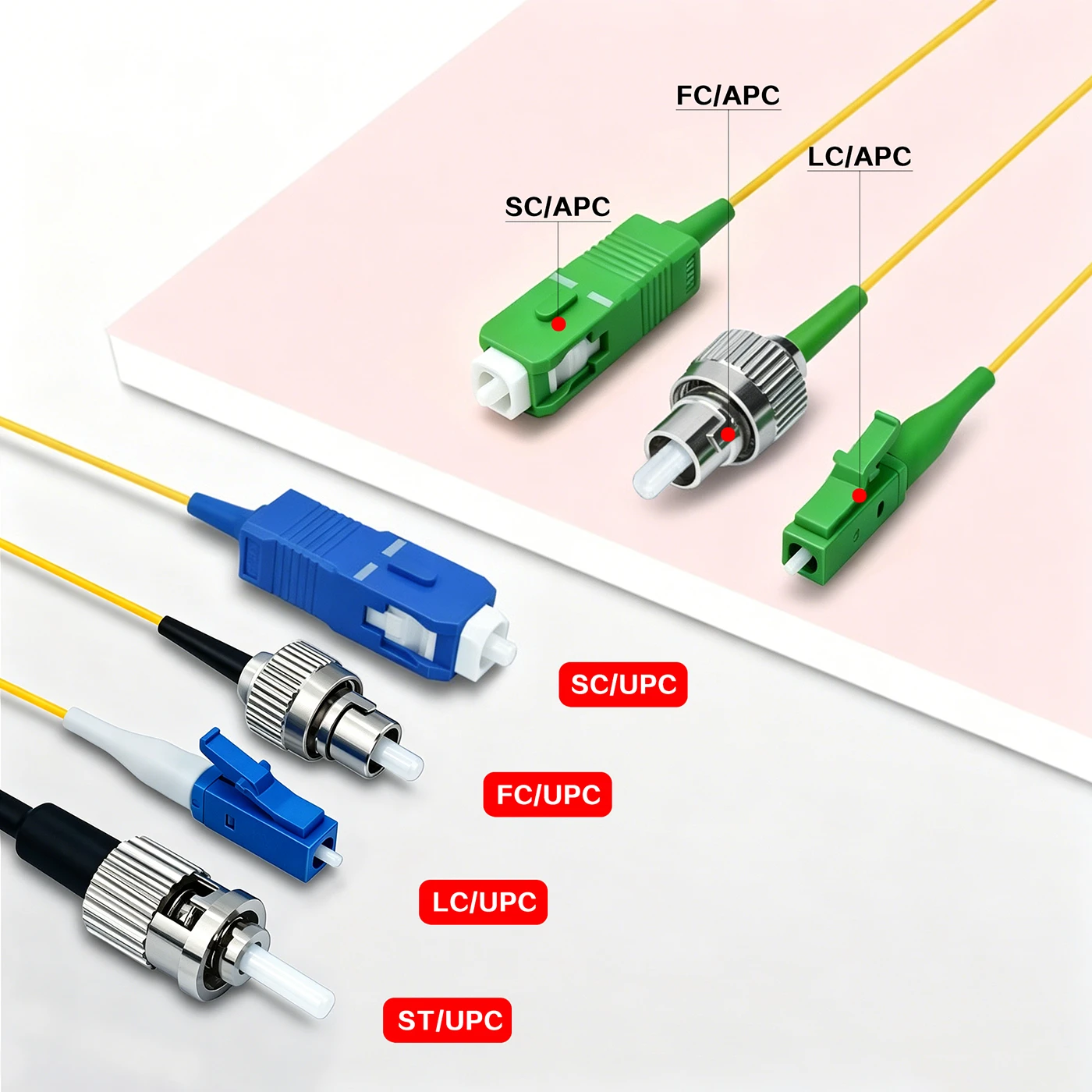
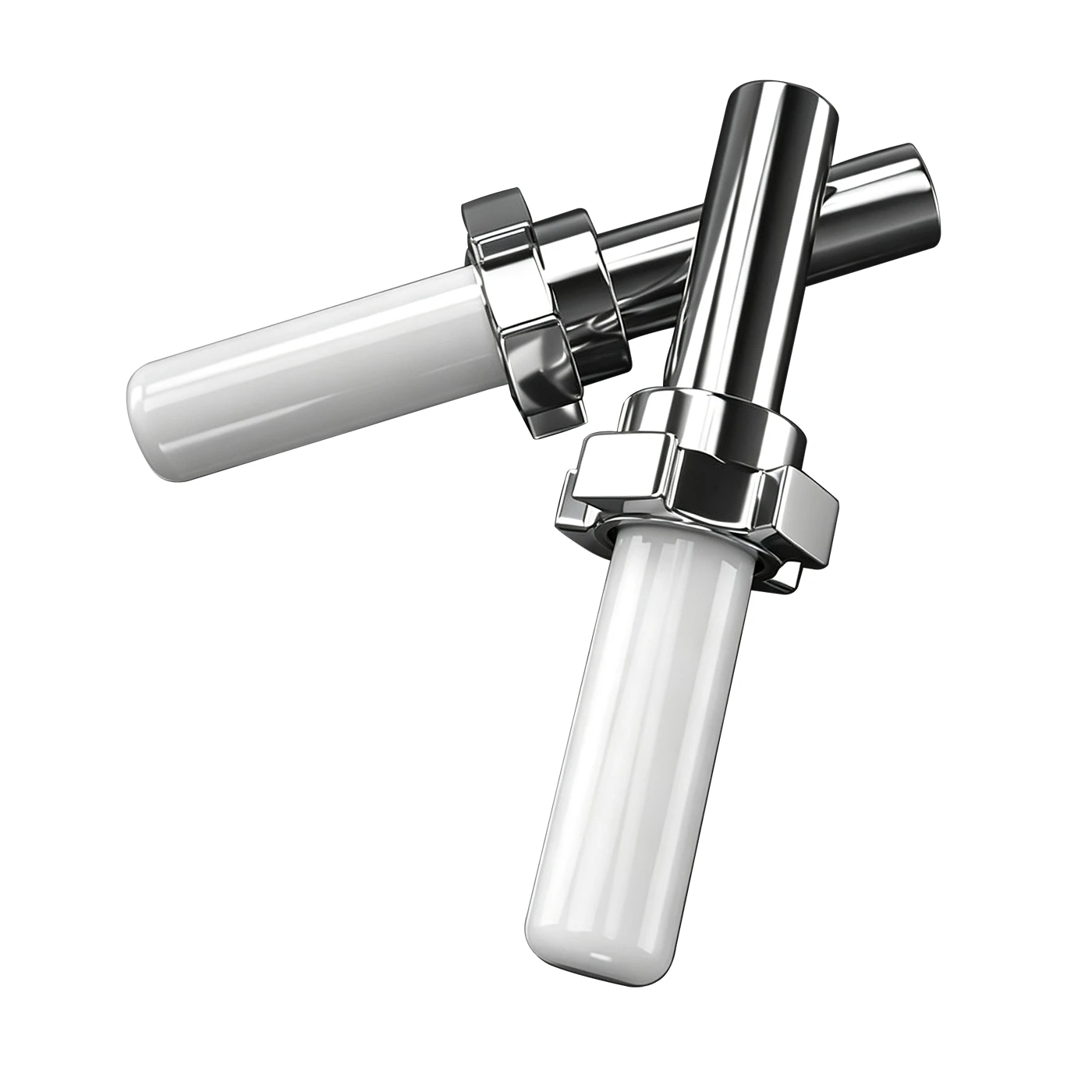
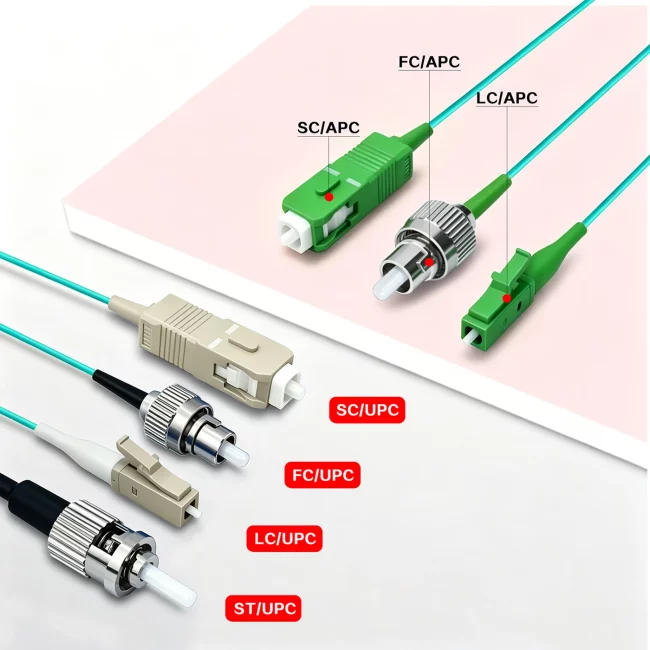
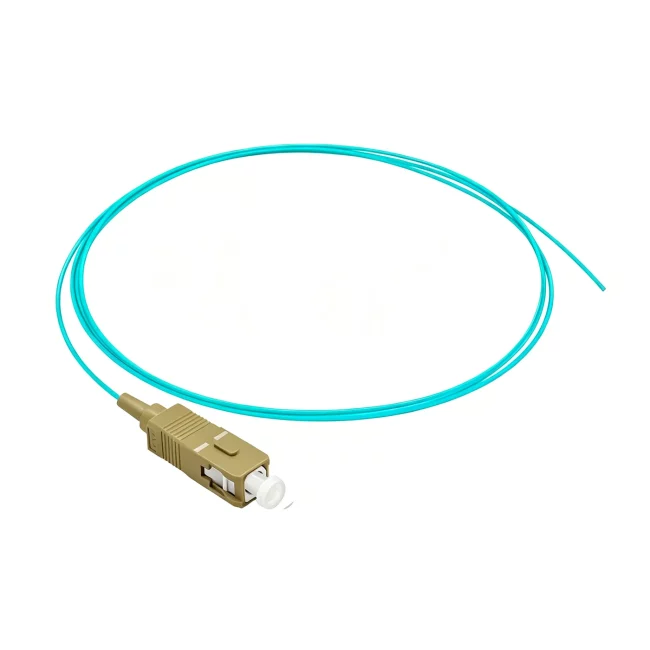
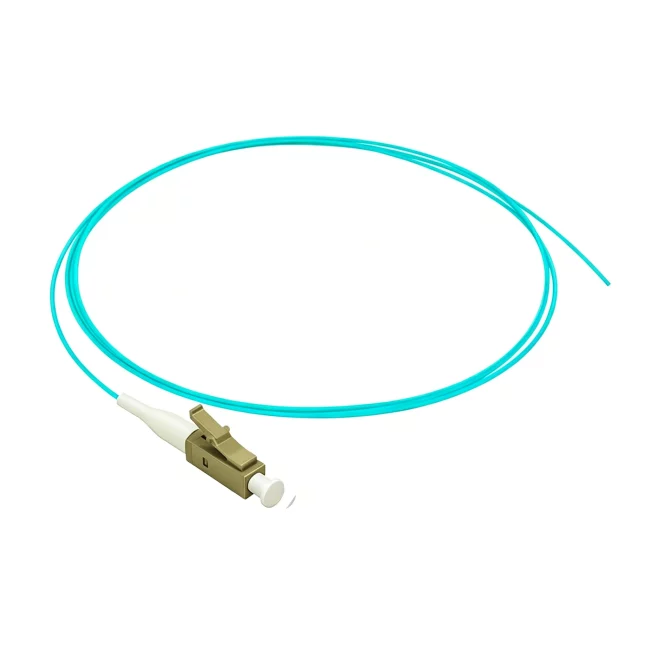
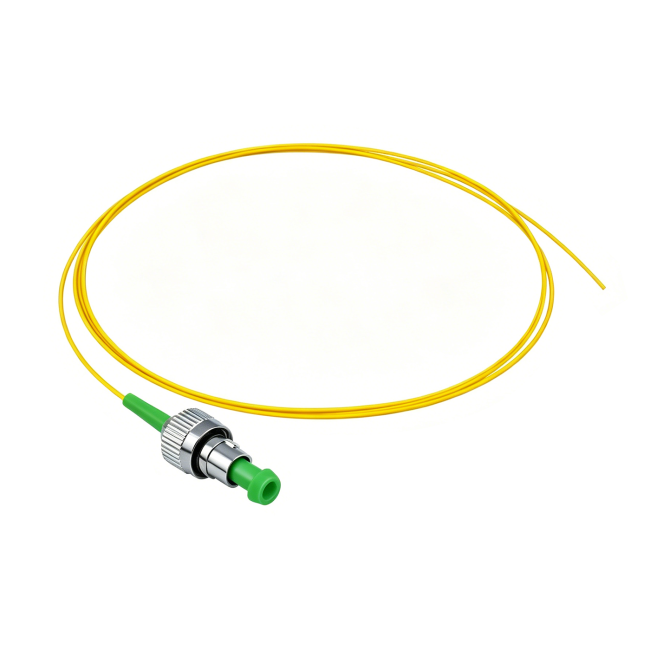
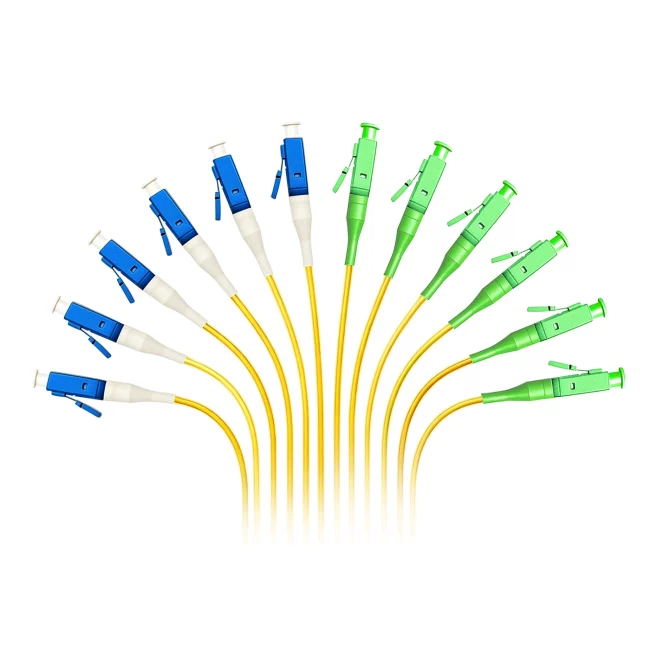
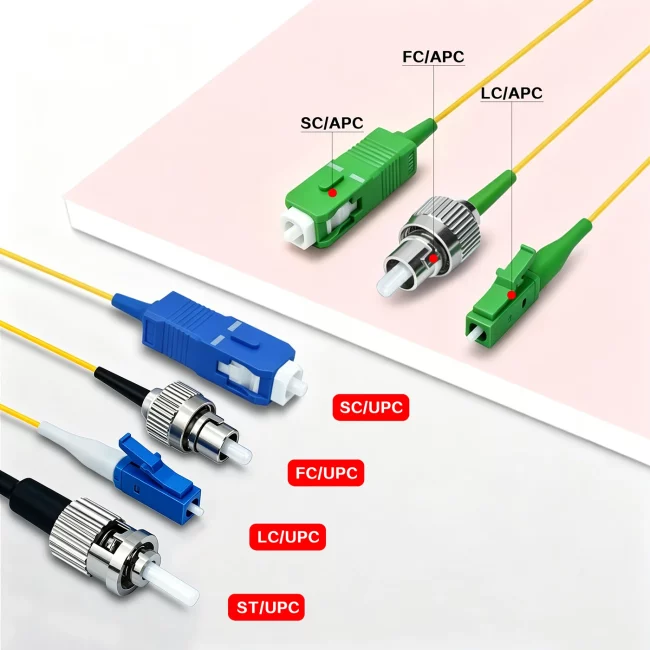
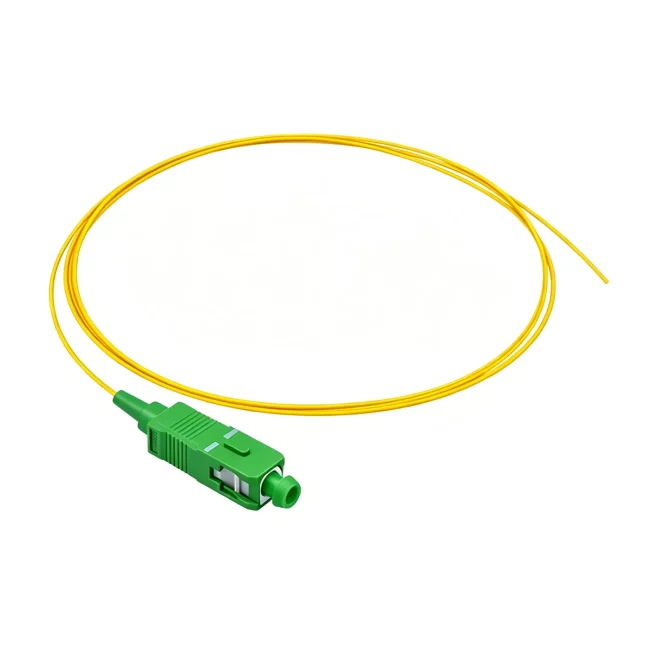
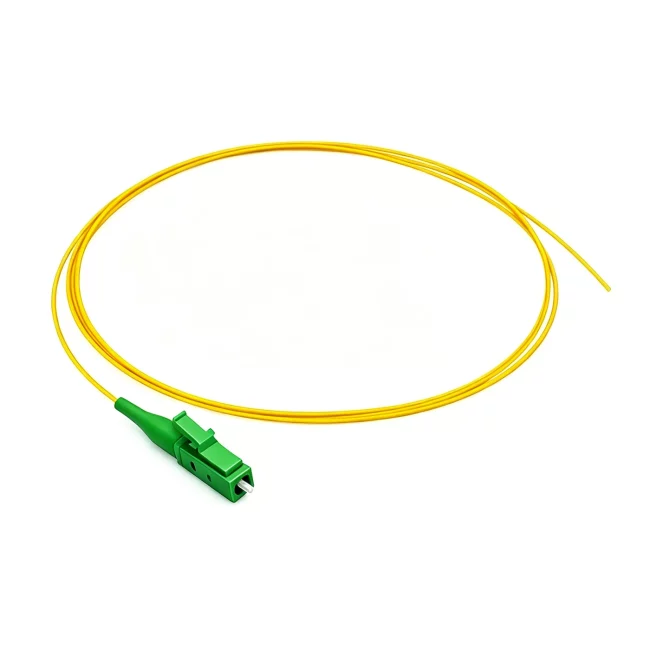
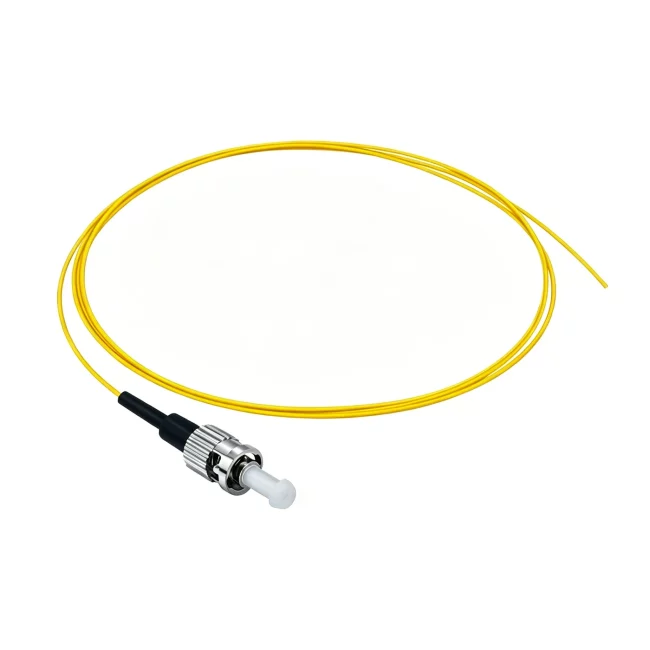
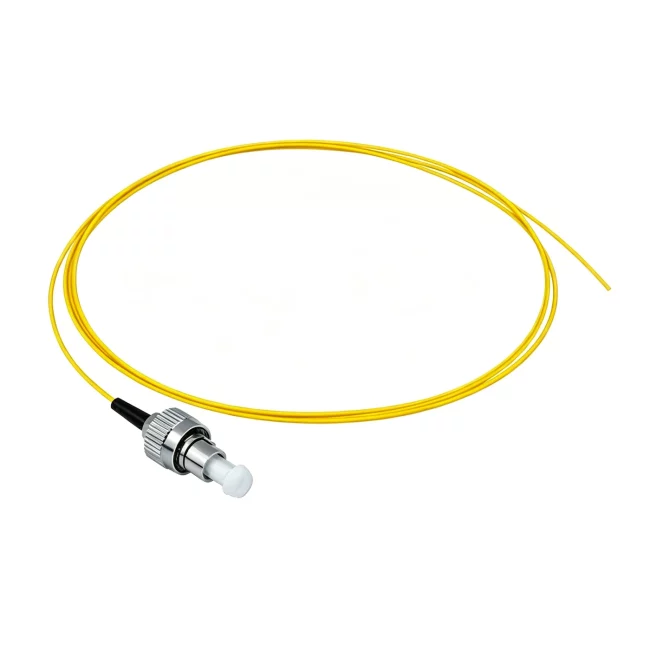
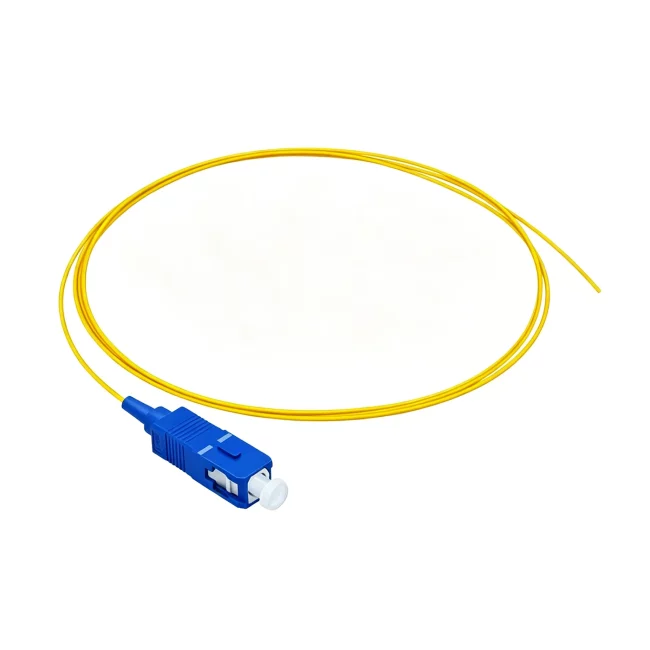
Fiber Optic Pigtail Types
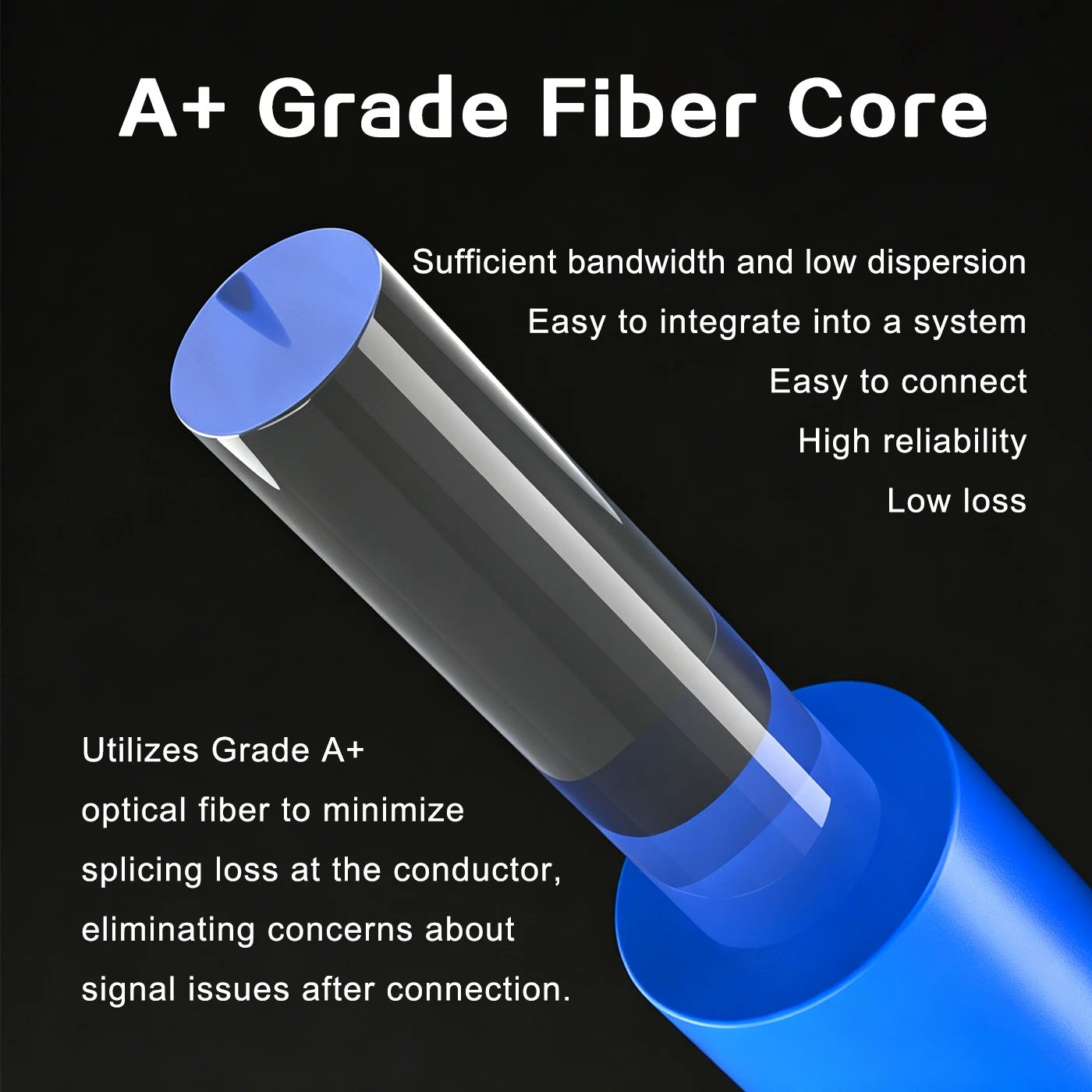
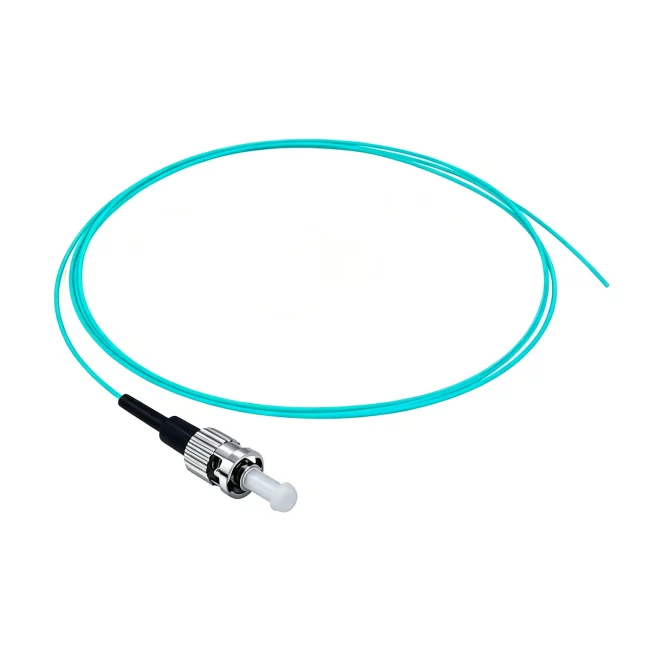
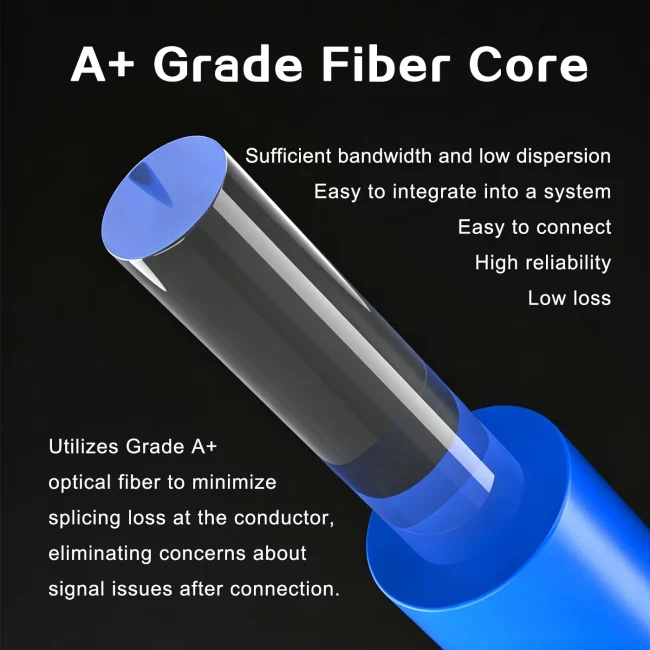
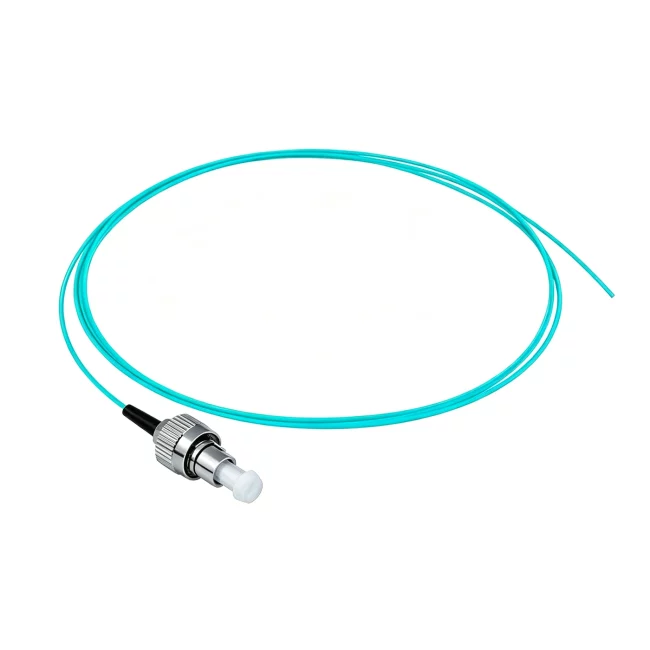
Fiber optic pigtails are developed for both fusion and mechanical splicing in fiber optic communication systems, providing a reliable and efficient solution for on-site cable termination. Manufactured with OS2 bend-insensitive fiber, these pigtails maintain dependable optical performance even when installed in confined spaces or around tight bends. The durable tight-buffered construction protects the optical fiber while allowing quick and easy stripping during installation. Compared with conventional fiber pigtails, they offer lower bend-related signal loss, improved installation flexibility, and enhanced long-term network reliability, making them ideal for telecommunications, data centers, FTTH deployments, and enterprise network applications.
Fiber Optic Pigtail Connector Advantage Specifications
Connector A:LC UPC Simplex
Connector B:Unterminated
Fiber Mode:OS2 9/125μm(G657A1),(Compatible with G.652.D)
Wavelength:1310/1550nm
Fiber Count:1 Fibers
Cable Type:Tight-Buffered
Cable Outside Diameter (OD):0.9mm
Cable Jacket:PVC (Unrated)
Min. Bend Radius (Optical Fiber):10mm
Min. Bend Radius (Fiber Cable):10/5D (Dynamic/Static)
Connector Durability:1000 times
Insertion Loss:≤0.30dB
Return Loss:≥50dB
Attenuation at 1310nm:≤0.36dB/km
Attenuation at 1550nm:≤0.22dB/km
Vibration:≤0.2dB
Interchangeability:≤0.2dB
Operating Temperature:-40 to 75°C (-40 to 167℉)
Storage Temperature:-45 to 85°C (-49 to 185℉)
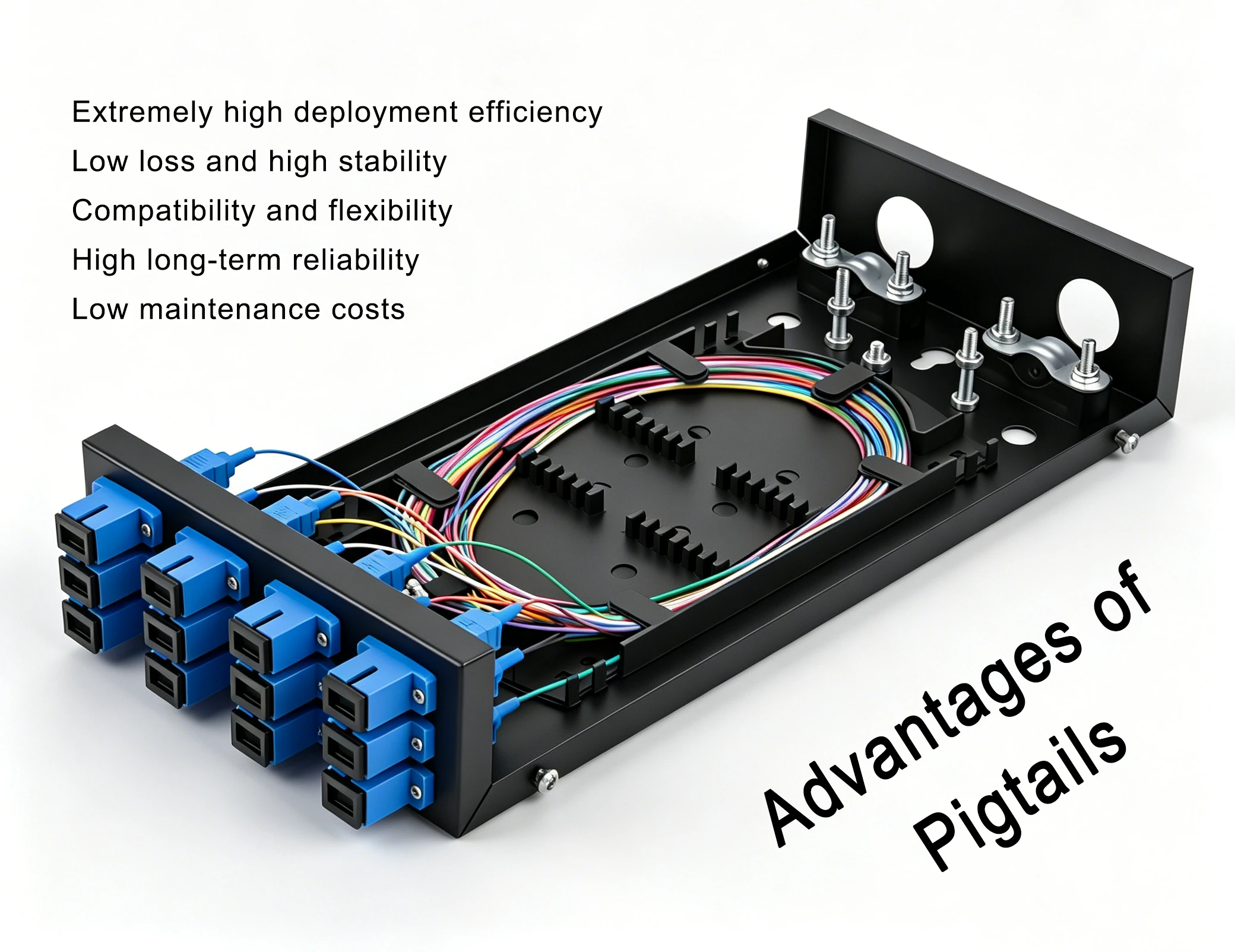
Fiber Optic Tails Advantages
1、Low insertion loss and high return loss
2、Fast and reliable fiber termination
3、Supports fusion and mechanical splicing
4、Bend-insensitive fiber for flexible routing
5、Durable tight-buffered construction
6、Easy-strip coating for quick installation
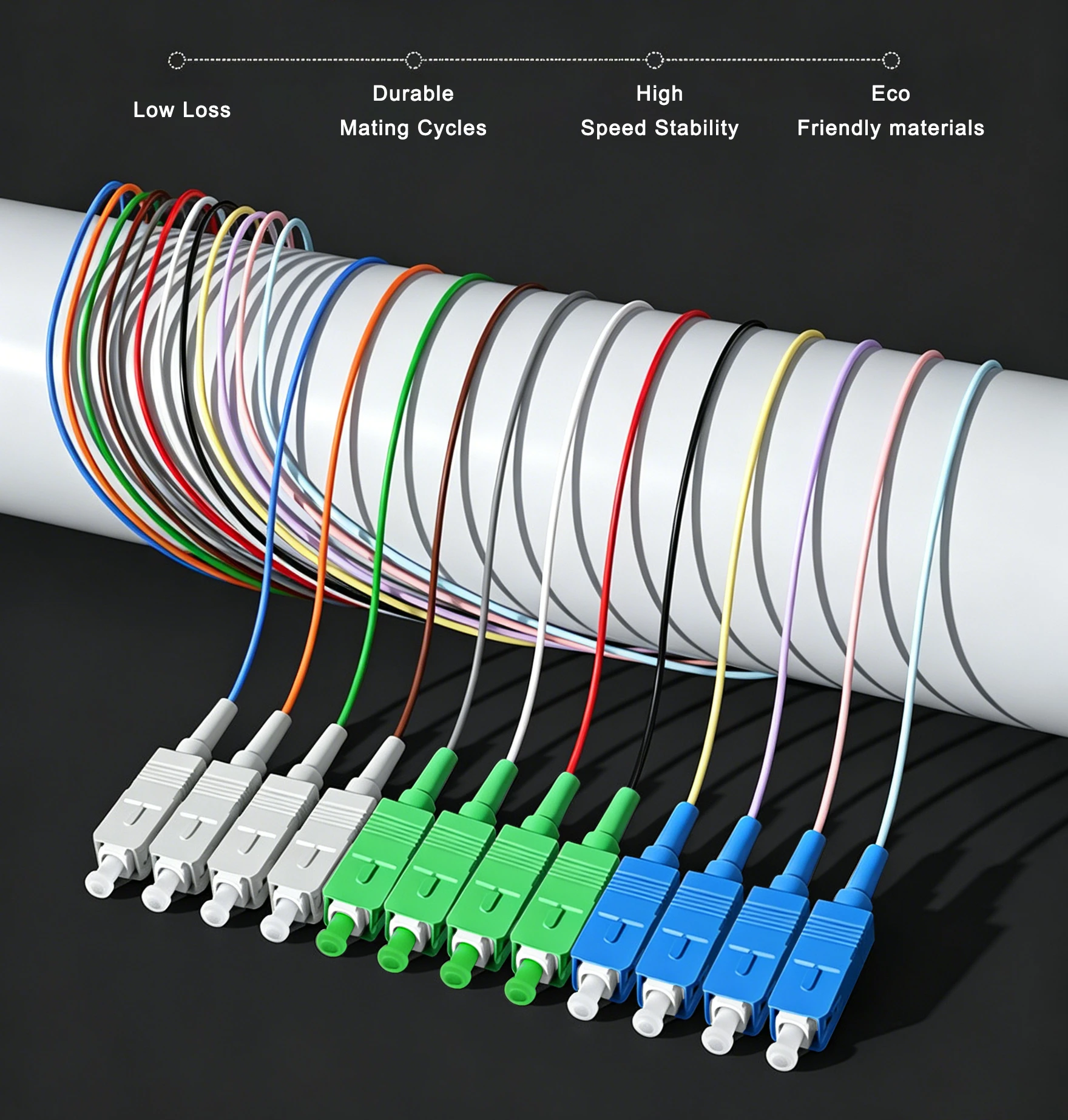
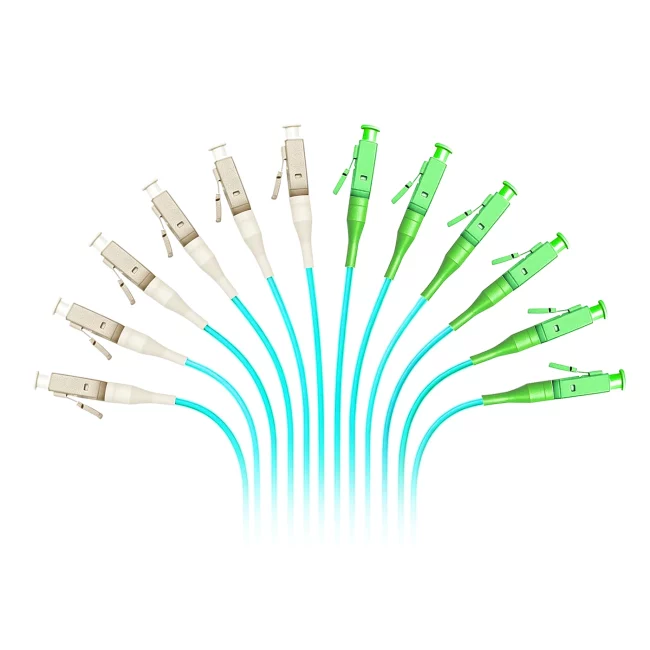
7、Multiple connector types and polish options
8、Factory tested for consistent performance
9、Ideal for FTTH, data centers, and telecom networks
10、Long service life with stable optical transmission
Fiber Pigtails Types Features:
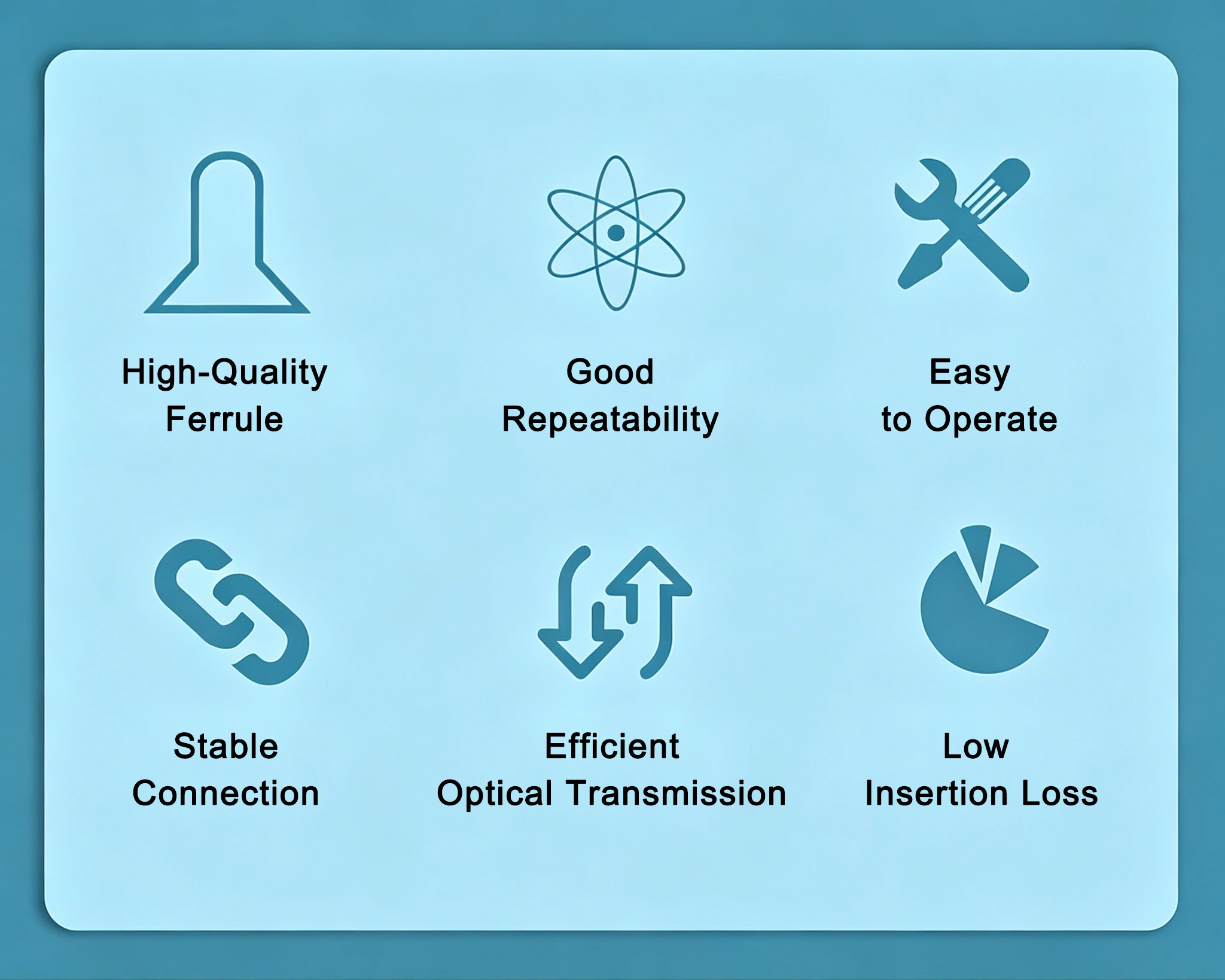
1、Factory-polished for consistent performance
2、Low insertion loss, high return loss
3、Supports fusion and mechanical splicing
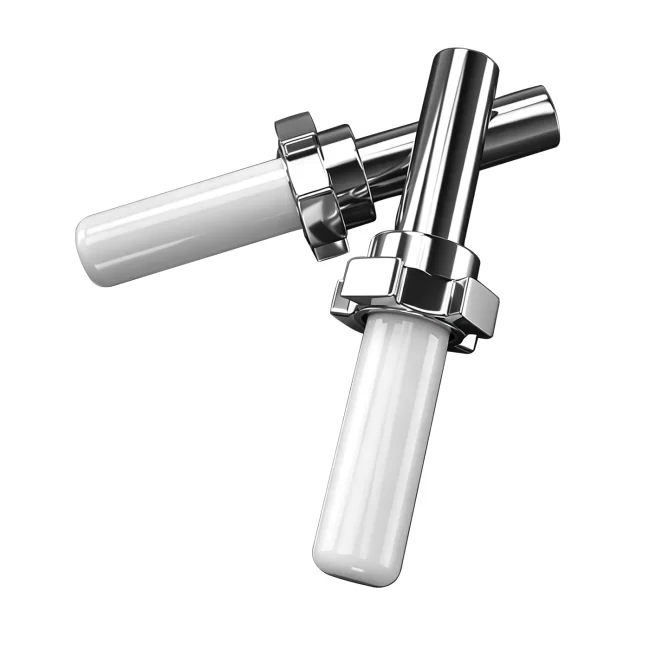
4、Premium zirconia ceramic ferrule
5、Easy-strip tight-buffered fiber
6、Bend-insensitive fiber available
7、Multiple connector and polish options
8、Durable and reliable construction
9、Color-coded for easy identification
10、100% factory tested before shipment
Pigtail Fiber Applications
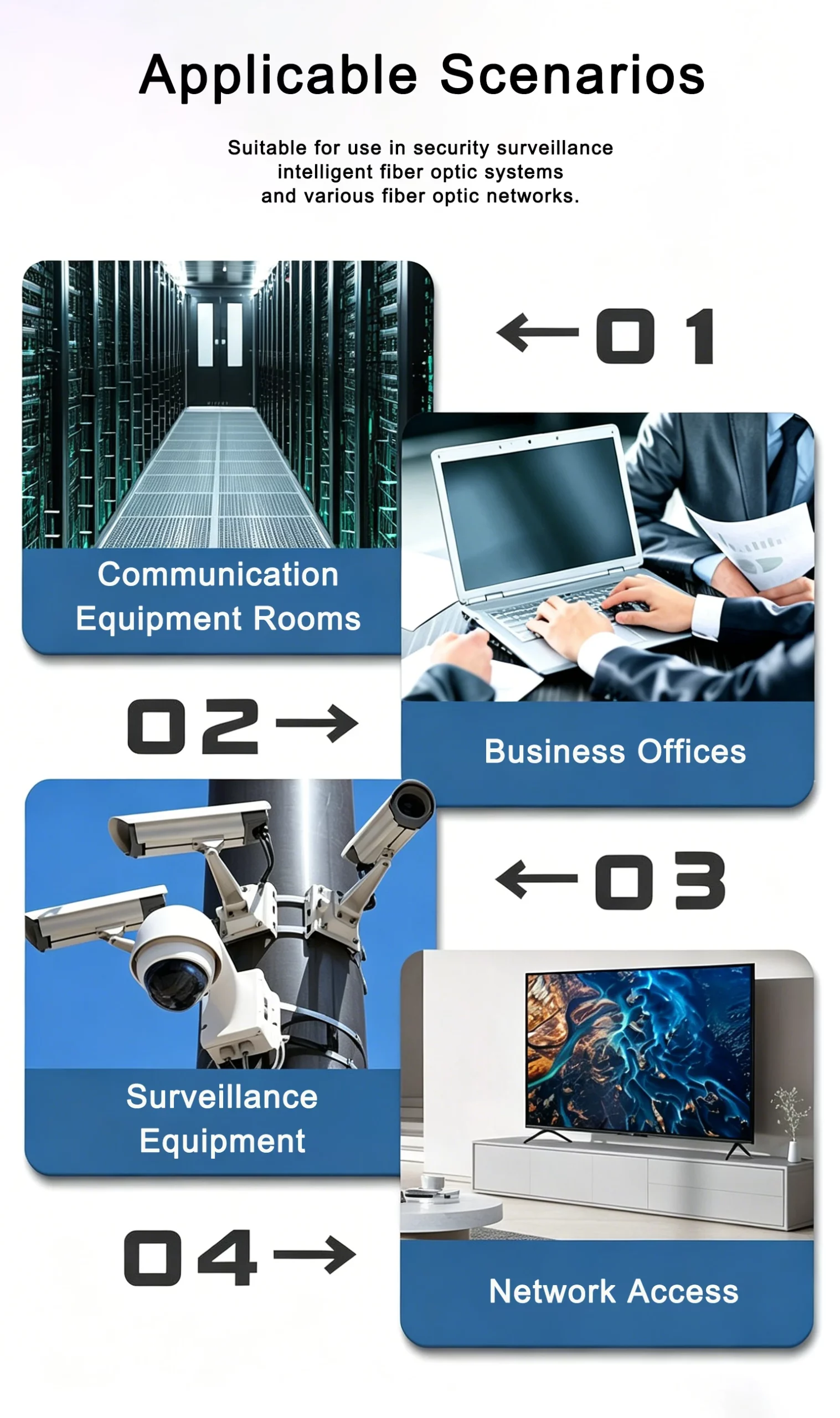
Fiber optic pigtails are widely used for fiber termination and splicing in telecommunications, data centers, FTTH networks, enterprise cabling, and broadband communication systems. They are ideal for optical distribution frames (ODF), fiber termination boxes, patch panels, LAN/WAN infrastructures, PON networks, CATV systems, and industrial fiber optic applications. Their reliable optical performance and easy installation make them an excellent choice for building, expanding, and maintaining modern fiber optic networks.
Fiber Tails Detection
Performance testing for fiber optic patch cords falls into the following categories:
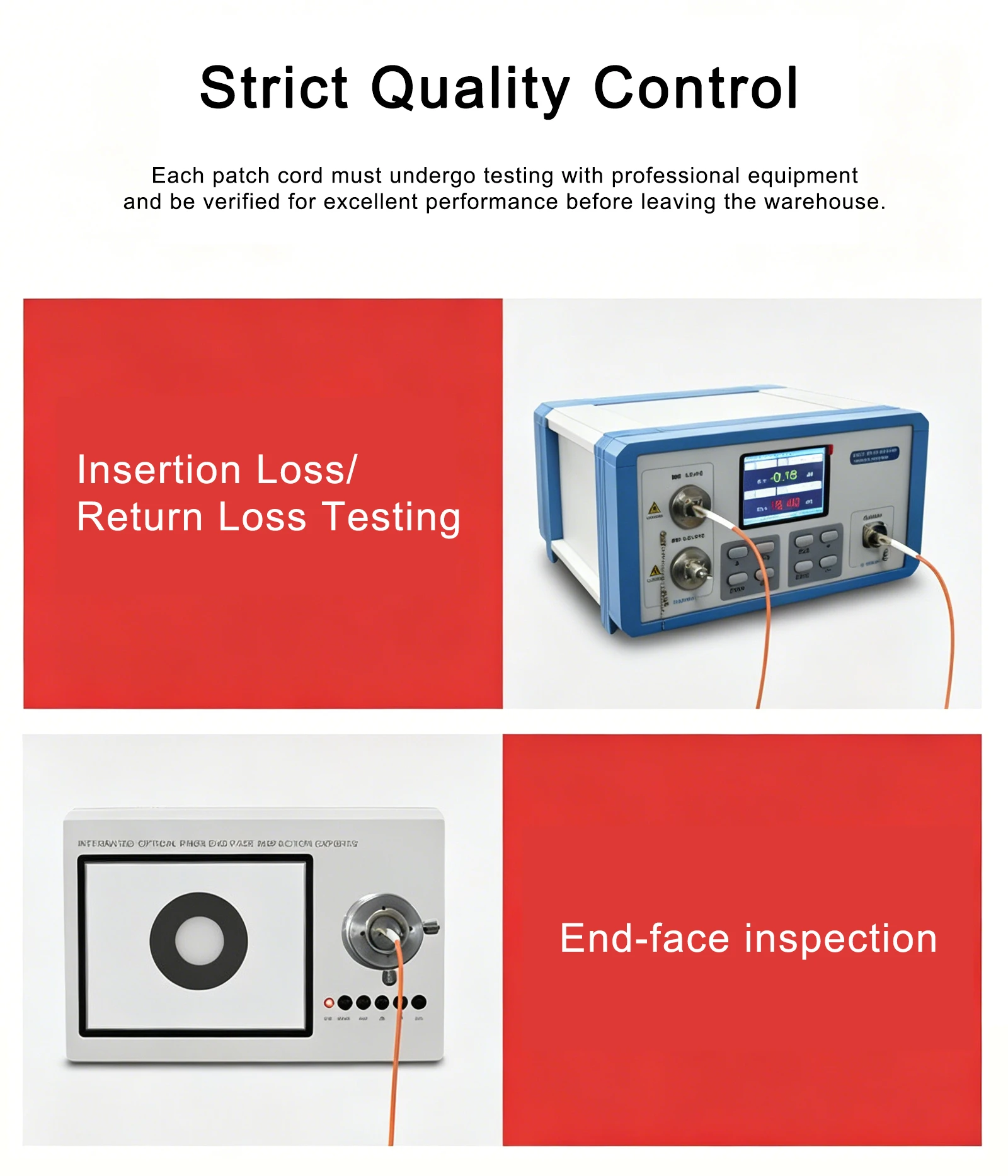
1. Optical performance testing: Includes return loss and insertion loss measurements. The FibKey 7602 integrated return loss/insertion loss tester is commonly used for this purpose.
2. End-face geometry testing: Parameters measured include radius of curvature, apex offset, and fiber height. Interferometers are used for this testing; the Norland AC/NC3000 or CC6000 models are widely adopted. The CC6000, in particular, is increasingly used in factories due to its excellent cost-performance ratio.
3. Fiber end-face scratch inspection: Video fiber microscopes are used for observation; for example, many factories use the FibView FV-400PA. This instrument provides exceptionally clear images and is extremely easy to operate. Some customers also use the FibKey-5600 variable-magnification microscope, which integrates 400x, 200x, and 80x magnification capabilities, allowing for clear and convenient inspection of both the fiber end-face and the ferrule end-face. Automated inspection using specialized software is also an option.
4. Fiber tensile testing: Measures the tensile force that the fiber optic connector can withstand.
5. Environmental temperature testing: Evaluates the performance metrics of the fiber optic connector under varying ambient temperatures.
 No products in the cart.
Reviews
There are no reviews yet.