

Direct Attach Copper Cable(DAC Cable) Types
Direct Attach Copper Cable(DAC Cable), also known as Twinax copper cable or high-speed cable, is a cable assembly with fixed connectors integrated at both ends. It is primarily used for short-distance interconnection between data center servers, switches, and storage devices. This cable comes in passive and active types. Passive DACs are suitable for transmission distances ≤5 meters, while active DACs have built-in amplifiers that support longer connections.
DACs use copper conductors to transmit electrical signals. Their interfaces are compatible with optical modules but omit optical components, offering advantages such as low latency, low power consumption, and low cost. The wire gauge affects transmission performance; for example, 26AWG wire gauge has lower transmission loss than 30AWG. Compared to active optical cables (AOC), DACs are 2-5 times cheaper, but have weaker electromagnetic interference resistance and typically have a transmission distance of no more than 10 meters. They are mainly used in top-of-rack (TOR) cabling, supporting data transmission rates from 10Gbps to 400Gbps.
DAC Cable Specifications
Connector Type:40G QSFP+ to 4x 10G SFP+
Max. Data Rate:40Gbps
Media:Copper
Cable Type:Passive Twinax
Power Consumption:≤0.1W
Wire AWG:30AWG
Jacket Material:PVC
Cable Distance (Max.):7meters
Temperature:0 to 70°C (32 to 158°F)
Application:40G to 10G Ethernet
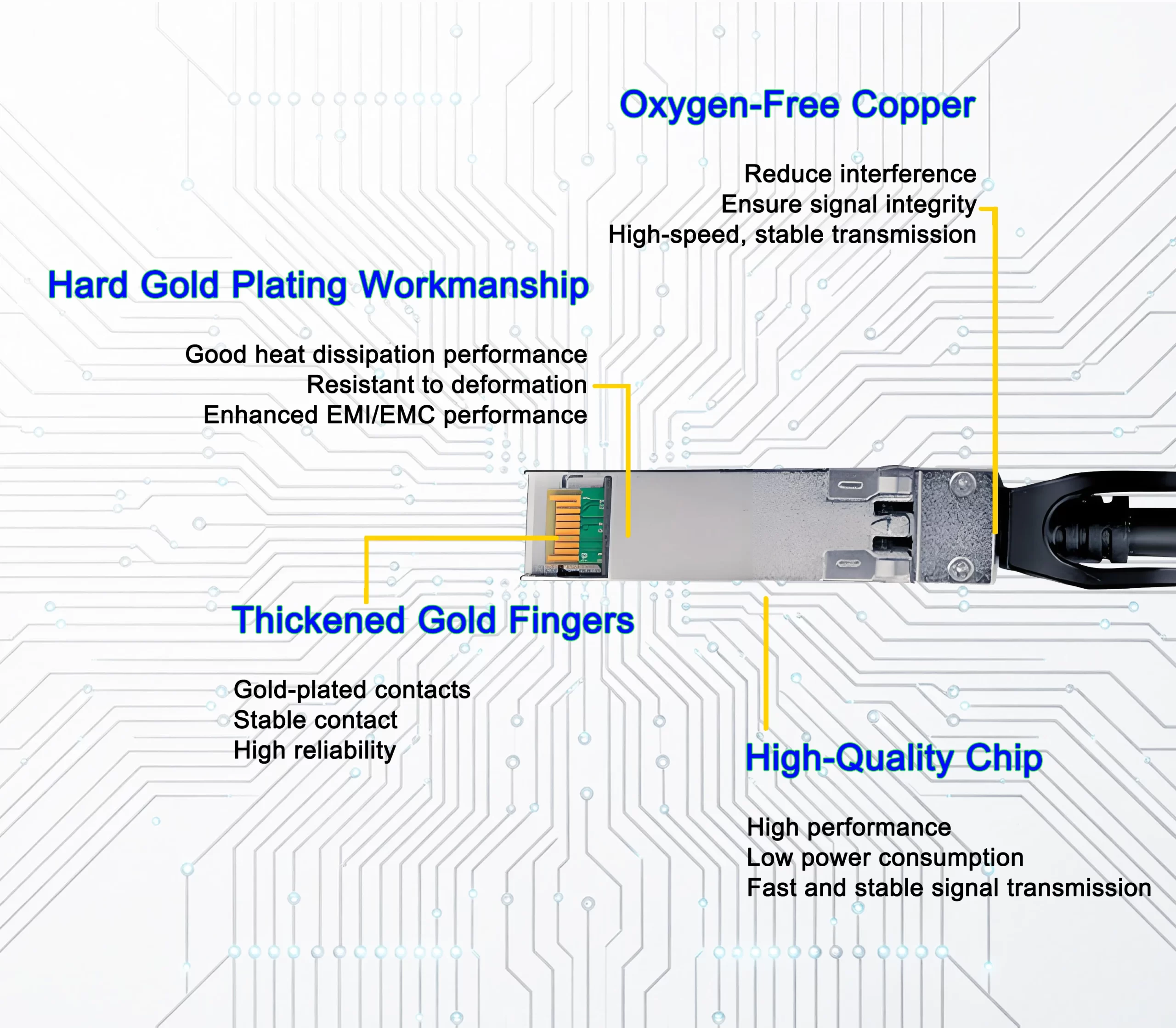
DAC Cable Features and Advantages
Direct Attach Copper Cable(DAC Cable) is a cable assembly featuring fixed connectors at both ends—where the connector heads and copper cabling are permanently integrated—primarily used for short-range, high-speed interconnects between servers, switches, and storage devices in data centers.
DACs are categorized by transmission rate into types such as 10G SFP+, 25G SFP28, 40G QSFP+, and 100G QSFP28. They are also classified as either passive or active based on the presence of active components: passive DACs contain no chips and are suitable for transmission distances of 5 meters or less, whereas active DACs incorporate built-in amplifiers or signal driver chips to compensate for signal loss and extend connection distances.
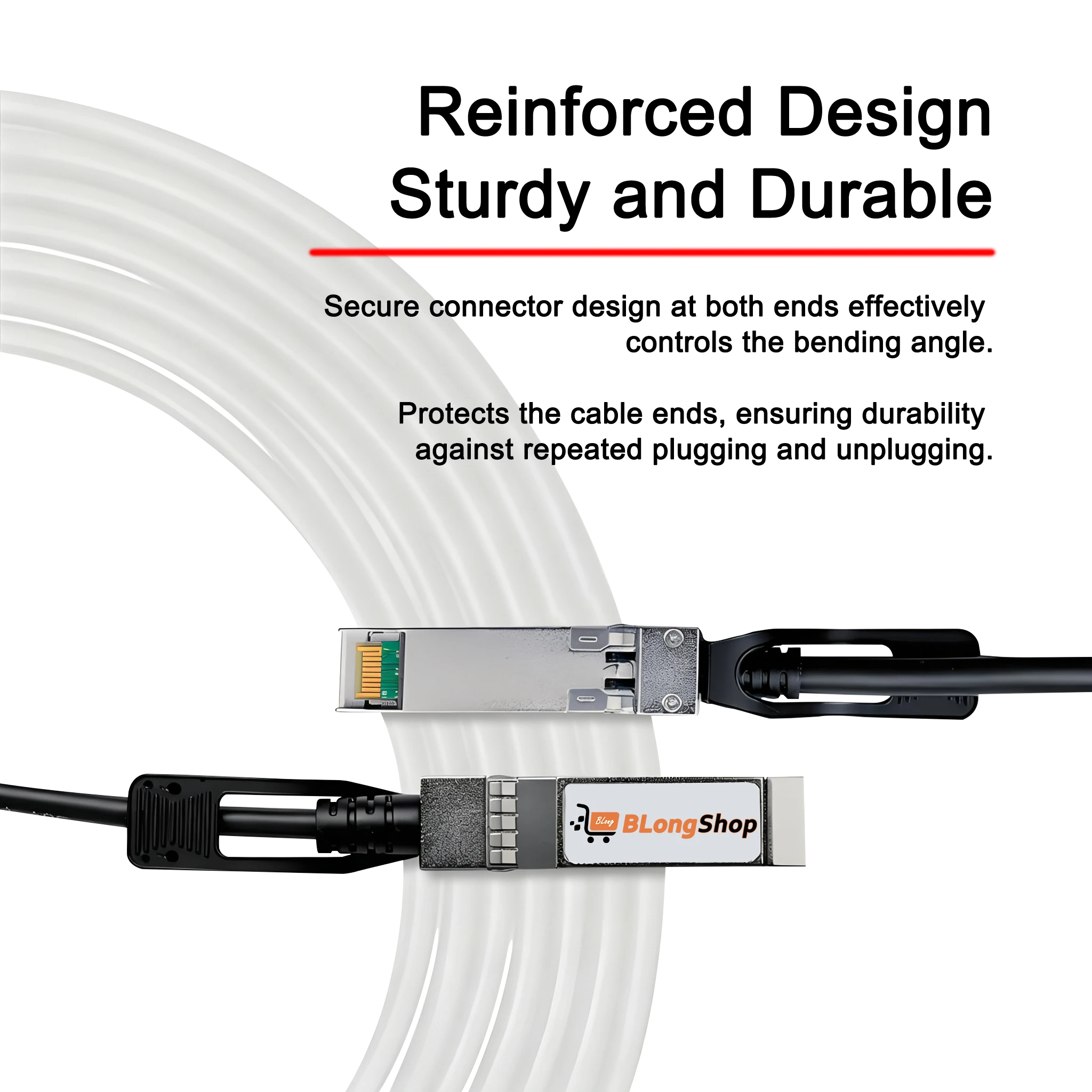
Constructed using silver-plated conductors and foamed insulation cores, DACs employ both pair-level and overall shielding. They are available in wire gauges ranging from 30 AWG to 24 AWG and in various configurations, such as 2-pair (2P), 4-pair (4P), or 8-pair (8P). Passive DACs are typically used for short-range transmission (under 5 meters), while active DACs (such as ACC/AEC) are suited for applications requiring greater transmission distances and higher performance. DAC length is constrained by data rate; typical maximum lengths are 7 meters for 10 Gbps, 5 meters for 25 Gbps, 3 meters for 56 Gbps, and 2 meters for 112 Gbps.
The connectors on DACs match the interface types found on optical transceivers. Their advantages include high performance, low power consumption, low cost, and low latency—with passive DACs consuming zero power. Disadvantages include limited transmission distance, greater weight and bulk, and susceptibility to electromagnetic interference.
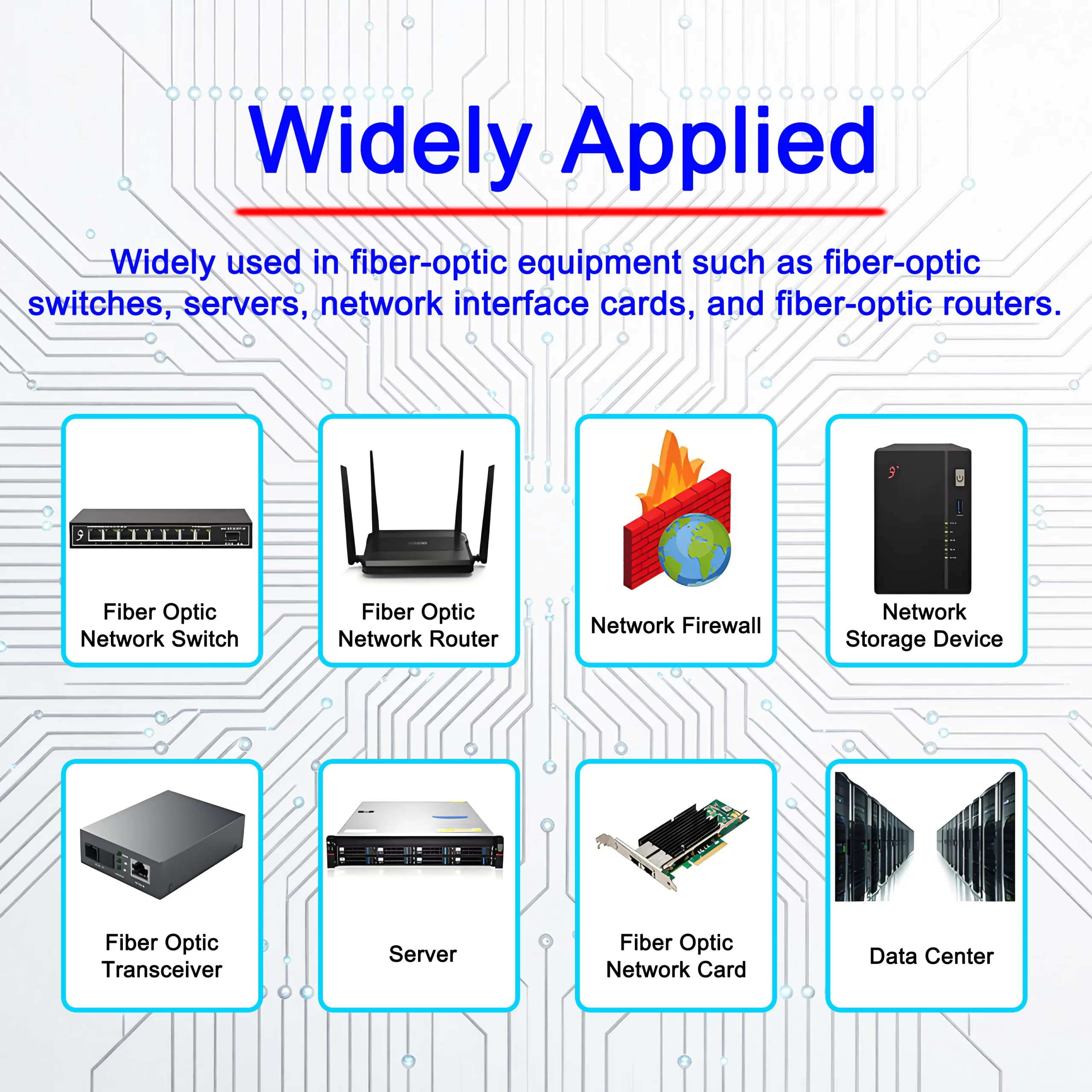
DAC Cable Application
DAC cables are widely used in data centers, Storage Area Networks (SANs), and High-Performance Computing (HPC) environments to provide short-range, high-speed, and highly reliable interconnects between devices.
DACs are a common solution for short-range cabling within racks (ToR scenarios); they also serve as a viable, low-cost option for inter-rack connections (EoR scenarios) when the transmission distance is under 10 meters. They are primarily used to interconnect network equipment such as servers, switches, routers, and storage devices.
DACs offer superior adaptability compared to Active Optical Cables (AOCs) in immersion liquid cooling environments.
DACs represent a highly cost-effective short-range interconnect solution for data centers. Their advantages include lower procurement costs compared to “fiber optic cable plus optical module” or AOC setups; passive DACs consume virtually no power and generate no additional heat; and the end-to-end direct connection eliminates the need for photoelectric conversion, resulting in higher reliability and lower latency.
DACs are generally suitable for short-range transmission (under 5 meters); passive DACs are typically chosen for distances of less than 5 meters, whereas longer distances (e.g., 5–7 meters or more) require the use of Active Copper Cables (ACC/AEC) to compensate for signal loss.
 No products in the cart.
Reviews
There are no reviews yet.