

Active Optical Cable Types
Cables Utilizing External Power for Electro-Optical Signal Conversion
Active Optical Cables (AOCs) are communication cables that require an external power source to convert between electrical and optical signals during data transmission; they feature integrated optical transceivers at both ends to facilitate electro-optical conversion and optical transmission. Composed of integrated optoelectronic components (such as optical transceivers and multimode fiber), they are used for high-speed interconnection between devices in environments like data centers and high-performance computing systems. They support transmission distances ranging from tens to hundreds of meters (e.g., 10G SFP+ AOCs reach up to 300 meters) and data rates up to 400Gbps, offering advantages such as high bandwidth, light weight, immunity to electromagnetic interference, and low signal attenuation. Common types include 10G SFP+, 25G SFP28, 40G QSFP+, and 100G QSFP28. They are widely used in fields such as data centers, cloud computing, digital signage, and high-performance computing.
Active Optical Cable Specifications
Connector Type:QSFP28 to 4xSFP28
Max. Data Rate:100Gbps
Minimum Bend Radius:30mm
Cable Distance (Max.):100m at OM3
Jacket Material:LSZH
Cable Type:OM3
Wavelength:850nm
Power Consumption:≤3.5W for QSFP, ≤1W for SFP28
Receiver Type:PIN
Transmitter Type:VSCEL
Operation temperature:0 to 70°C (32 to 158°F)
Application:100G to 25G Ethernet Compliant
AOC Cable Technical Features and Advantages
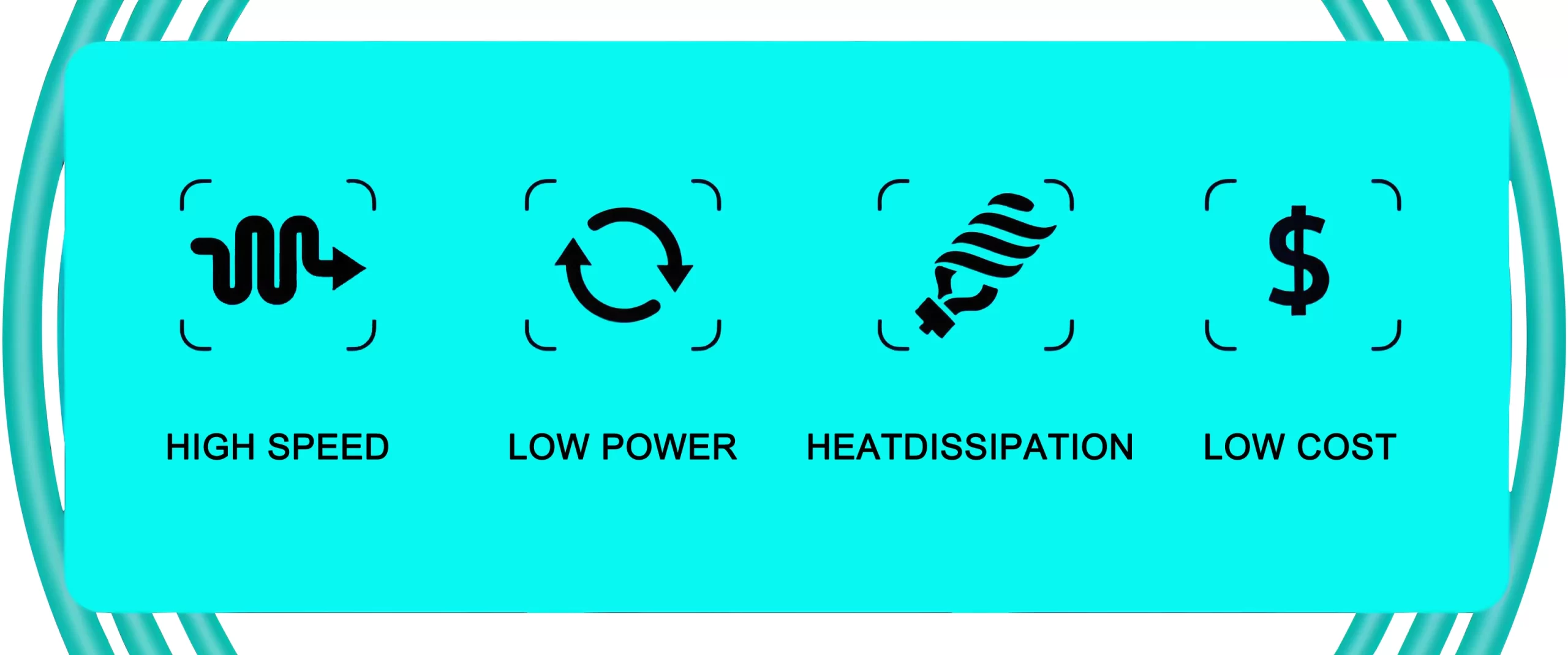
Compared to traditional cables, Active Optical Cables (AOCs) offer numerous advantages, including high transmission rates, long transmission distances, low power consumption, ease of use, and immunity to electromagnetic interference.
AOCs support data rates ranging from 10G, 25G, 40G, 100G, 200G, and 400G up to 800G; for instance, a 100G QSFP28 AOC delivers a transmission rate of 100 Gb/s, while a 200G QSFP56 AOC delivers 200 Gb/s. Transmission distances typically range from 30 to 100 meters—reaching 100 meters with multimode fiber—though specific models like the 10G SFP+ AOC can extend up to 300 meters. Regarding power consumption, a 100G QSFP28 AOC consumes less than 2.5W, and a 25G SFP28 AOC consumes approximately 0.8W. By utilizing optical fiber as the transmission medium, AOCs are unaffected by electromagnetic interference, ensuring signal integrity.
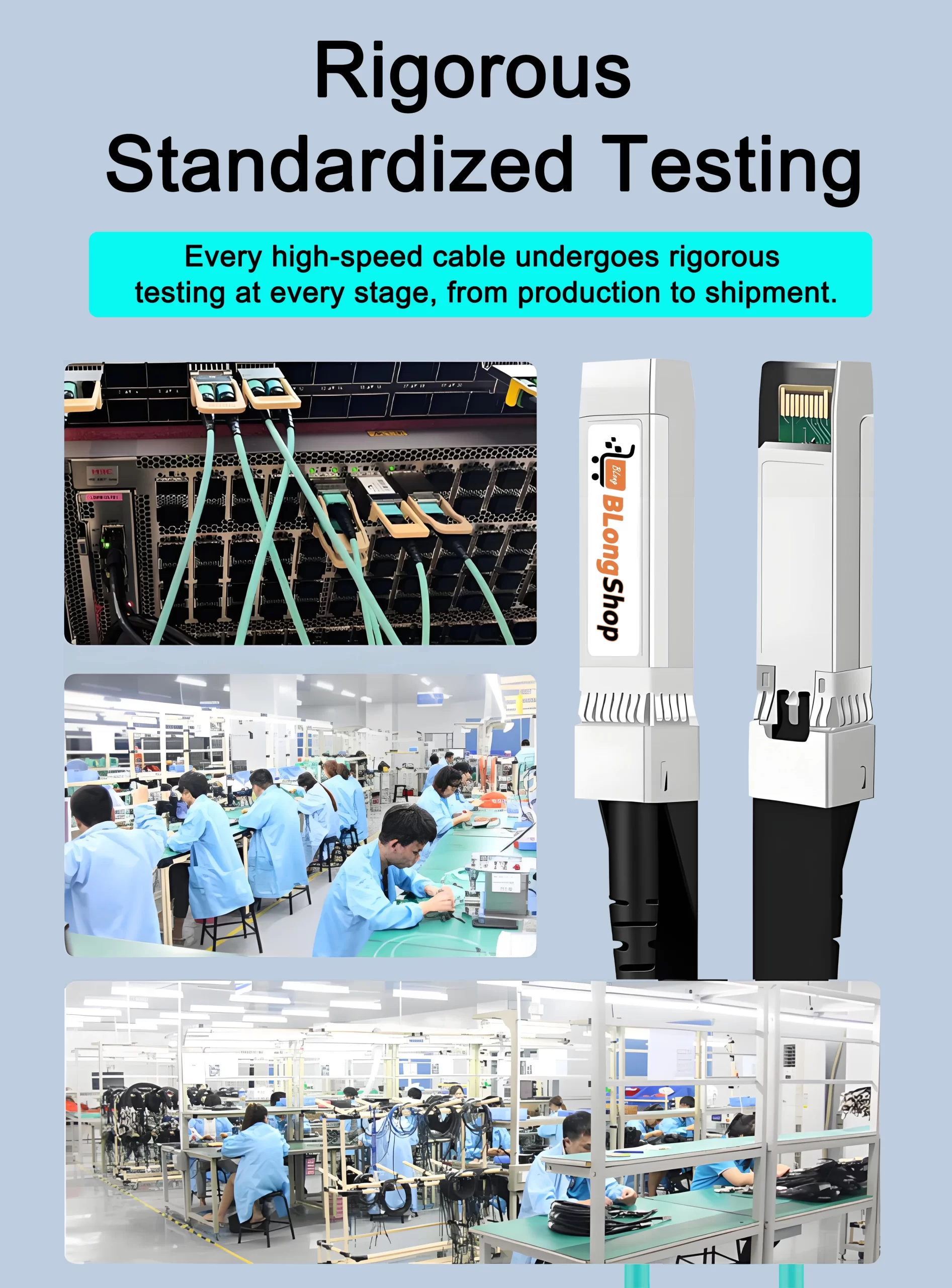
AOCs are lighter and thinner than copper cables of equivalent specifications, facilitating high-density cabling and heat dissipation in data centers; their small minimum bend radius allows for flexible routing. As factory-terminated, 100% tested cable assemblies, they eliminate the need for fiber interface cleaning, offering high reliability, low maintenance costs, and a long Mean Time Between Failures (MTBF). Their commercial-grade operating temperature range is typically 0°C to 70°C, making them suitable for various environmental conditions. Additionally, AOCs offer advantages such as low latency, support for high-density connectivity, and a wide range of application scenarios.
AOC Cable Application
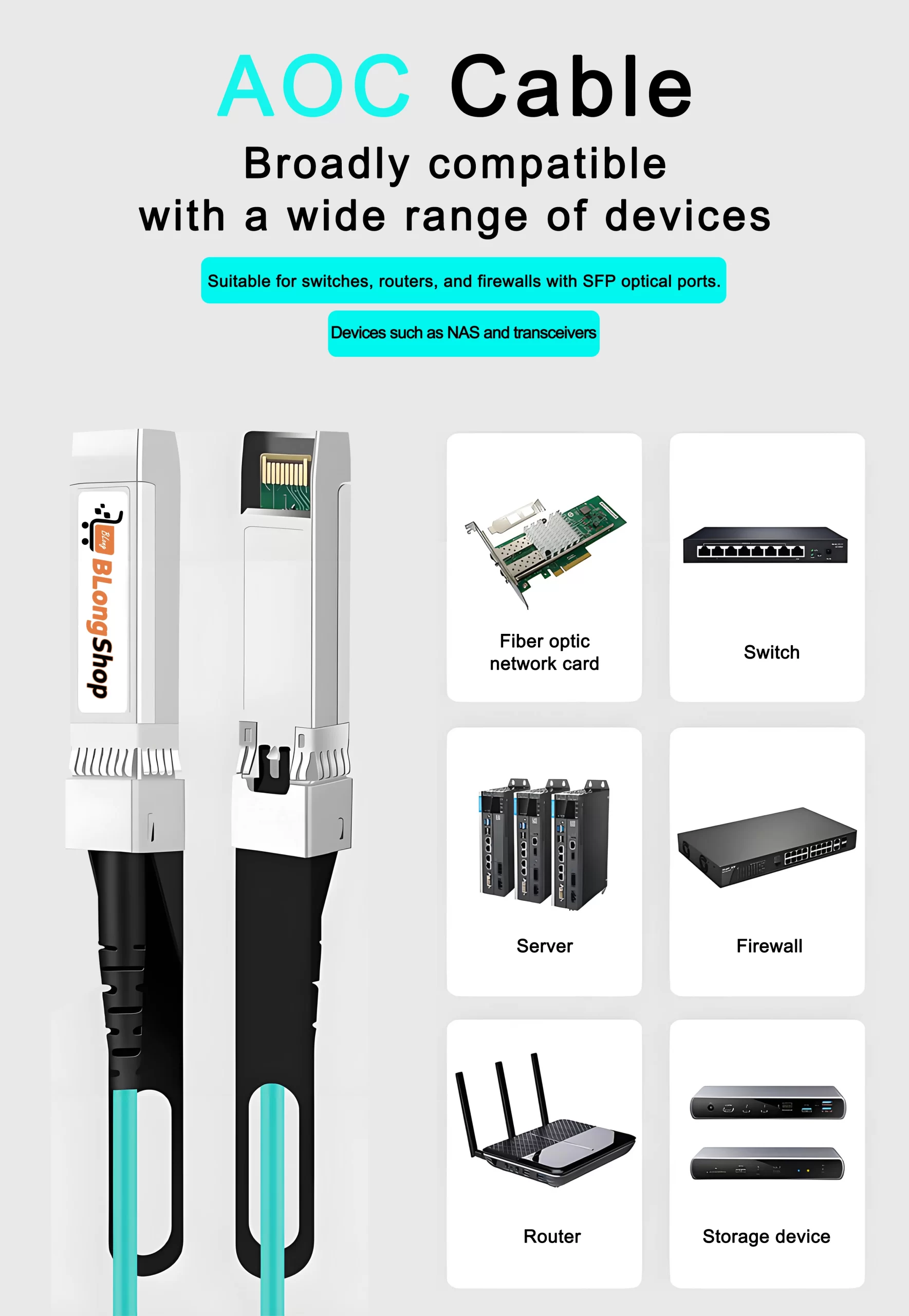
Thanks to their high speed, long transmission range, and immunity to interference, Active Optical Cables (AOCs) have become a common transmission solution in sectors such as data centers, High-Performance Computing (HPC), consumer electronics, and professional audio-video.
Data Centers and Cloud Computing
AOCs serve as a primary transmission medium for interconnecting servers, switches, and storage devices (such as Storage Area Networks) within data centers—both within racks and between racks—as well as for interconnecting data centers themselves. With transmission ranges spanning 10 to 100 meters, they are suitable for “Middle of Row” and “End of Row” cabling architectures, facilitating connections within racks and between adjacent racks. Supported interface types include 100G QSFP28, 200G QSFP56, and 400G/800G QSFP-DD/OSFP.
High-Performance Computing (HPC) and Artificial Intelligence (AI)
AOCs are widely used to connect NVIDIA GPU-based AI systems and Ethernet networks within HPC environments, enabling low-latency data transmission between nodes.
Consumer Electronics and Professional Audio-Video
AOCs are used for the long-distance, high-quality transmission of HDMI, DisplayPort, and USB (particularly USB4) signals. They support the lossless transmission of 4K and 8K ultra-high-definition video over distances ranging from tens to hundreds of meters. Specific application scenarios include home theaters, digital signage, video conferencing, live broadcasting, stage production, and command centers. Compared to traditional copper cables, AOCs offer advantages in long-distance transmission, electromagnetic interference immunity, and cable flexibility (being thinner and more pliable).
Other Fields
AOCs are also utilized in scenarios requiring high-speed, stable, and long-distance signal transmission, such as educational centers and laboratories, industrial control and instrumentation systems, and large-scale outdoor interactive gaming setups.
 No products in the cart.
Reviews
There are no reviews yet.