

Metal Armored Cables Type
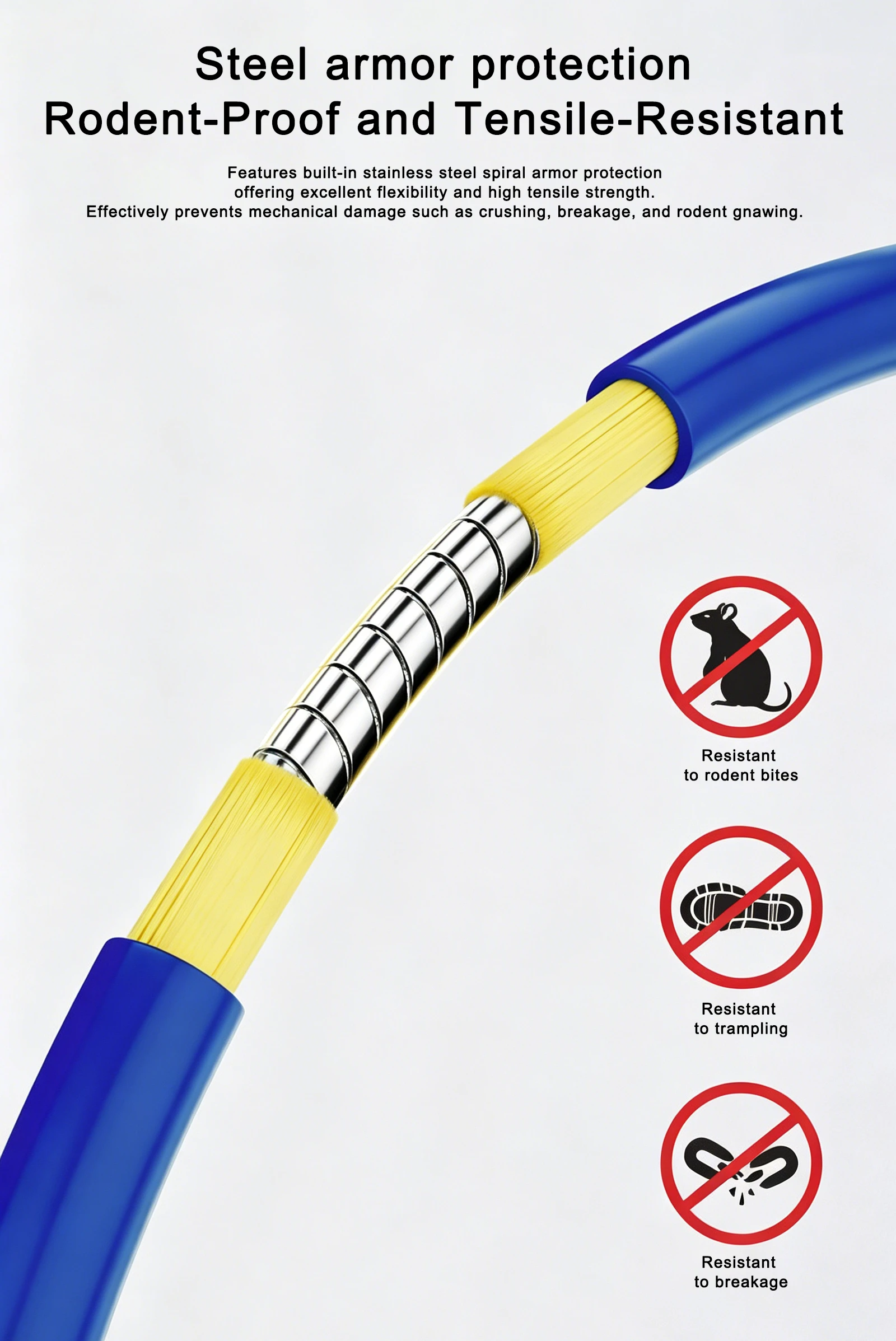
An armored patch cord is a type of fiber optic patch cord characterized by a stainless steel sleeve designed to protect the optical fiber. Its construction involves encasing the fiber in a small-diameter stainless steel tube, which is then further wrapped in aramid yarn and a helical stainless steel armor layer.
Known as “flexible metal-armored fiber optic cable,” this structure is created by using a specialized process to wrap a helical layer of flat-profile stainless steel material around a bare or tight-buffered fiber. This design enhances the fiber’s resistance to lateral pressure while maintaining its optical performance.
Armored Cables Advantage Specifications
Connector A:SC APC Simplex
Connector B:SC APC Simplex
Fiber Mode:OS2 9/125μm(G657A1),(Compatible with G.652.D)
Wavelength:1310/1550nm
Fiber Count:1 Fibers
Cable Outside Diameter (OD):3.0mm
Cable Jacket:Riser (OFCR-Optical Fiber Conductive Riser)
Construction Type:Single Armored, Stainless Steel Tube
Min. Bend Radius (Fiber Cable):10/5D (Dynamic/Static)
Tensile Strength:120/225N (Long/Short Term)
Insertion Loss:0.30dB Max
Return Loss:≥60dB
Operating Temperature:-20 to 70°C (-4 to 158°F)
Storage Temperature:-40 to 70°C (-40 to 158℉)
Armored Fiber Optic Cable Structure
Wiring efficiency is optimized by replacing traditional protective sleeves with reinforced stainless steel conduit. This product features an optical fiber encased in flexible stainless steel tubing, with an outer layer of flame-retardant PVC or similar materials, offering resistance to lateral pressure and bending, as well as protection against ants and rodents. A specialized process ensures a secure connection between the conduit and the connectors, effectively resolving issues such as fiber breakage and damage common with traditional designs.
Armored Fiber Connector Types
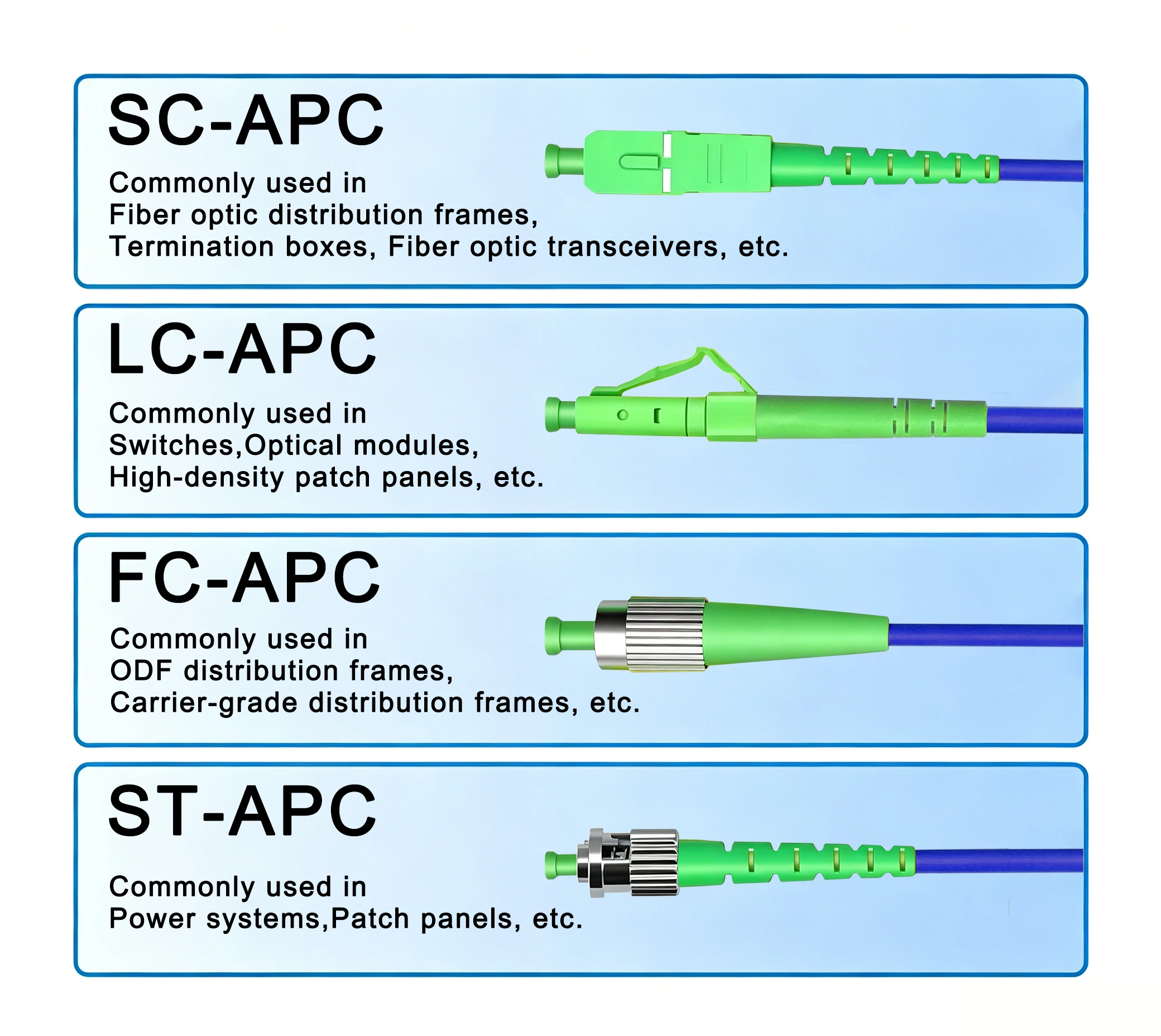
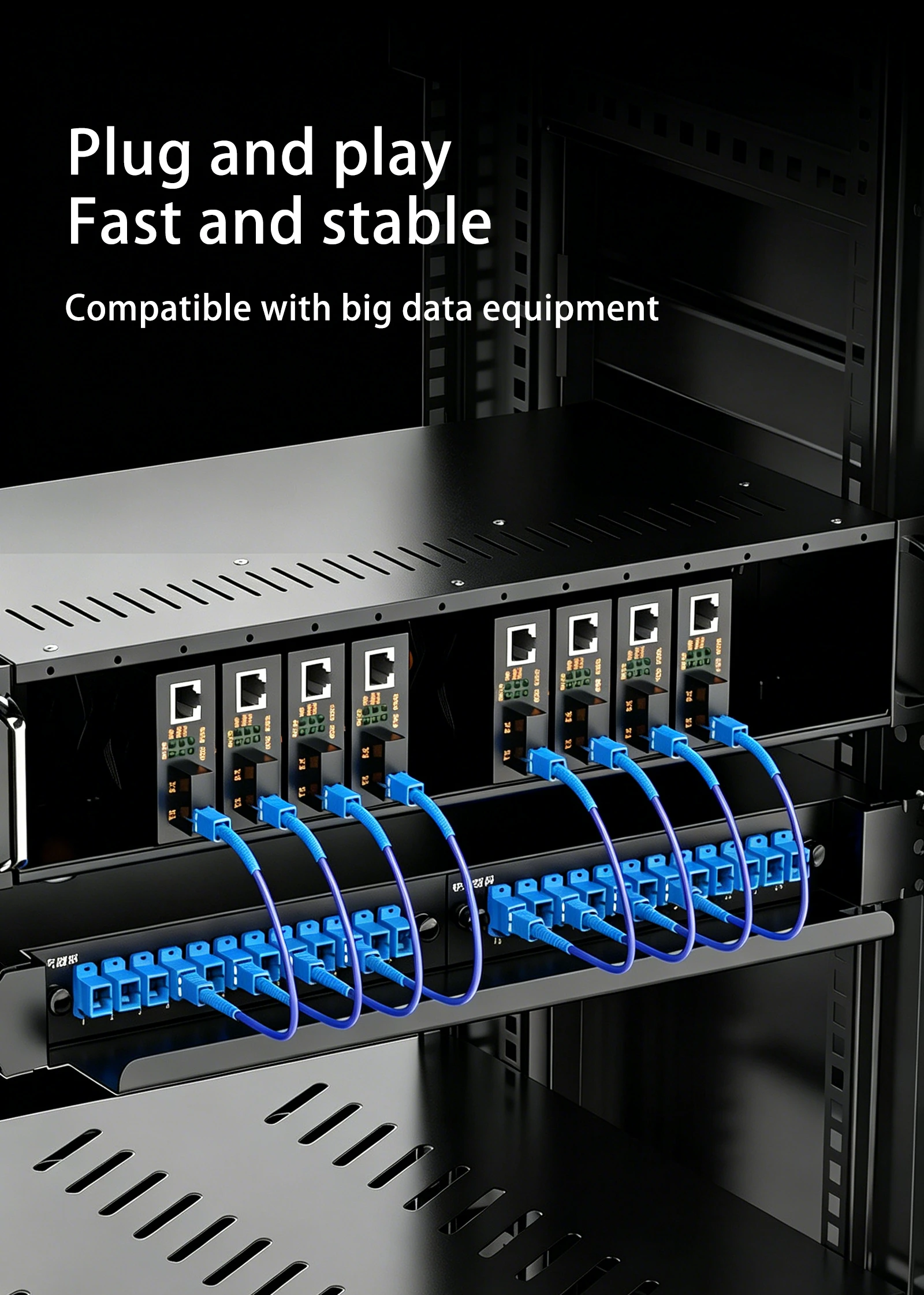
Specialty Fiber Optics—the connectors that plug into optical modules—come in various types that are not interchangeable. For instance, SFP modules connect to LC connectors, while GBIC modules connect to SC connectors. Below are detailed descriptions of several common fiber optic connectors used in network engineering:
① SC-type fiber optic patch cord: Connects to GBIC optical modules; it has a rectangular housing and uses a push-pull latching mechanism that requires no rotation. Commonly used on routers and switches.
② LC-type fiber optic patch cord: Connects to SFP modules; it utilizes a user-friendly modular jack (RJ-style) latching mechanism. Commonly used on routers.
③ FC-type fiber optic patch cord: Features a metal sleeve for external reinforcement and a screw-thread fastening mechanism. Typically used on the ODF (Optical Distribution Frame) side.
④ ST-type fiber optic patch cord: Often used with fiber optic distribution frames; it features a round housing and a screw-thread fastening mechanism. (Commonly used for 10Base-F connections and fiber optic distribution frames.)
Armored Fiber Cable Features:
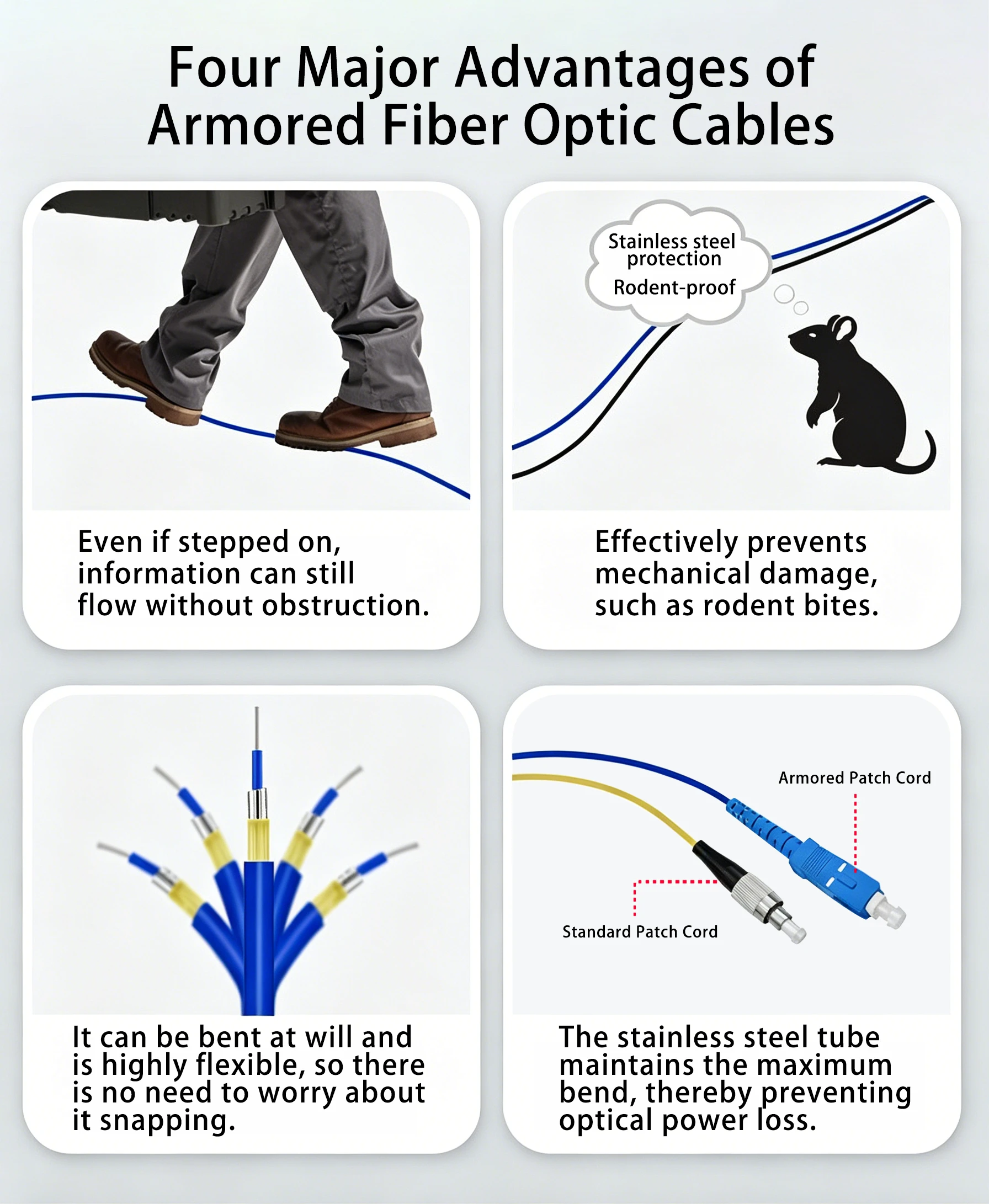
1. Protected by small-diameter stainless steel tubing;
2. Resistant to damage from improper twisting;
3. Facilitates easier installation and ensures safety;
4. Eliminates concerns about installation-related damage to the optical fiber;
5. Eliminates concerns about future external damage;
6. Reduces long-term maintenance costs;
7. Resistant to damage from improper twisting;
8. Resistant to lateral pressure and bending; protects against ants and rodent bites;
9. Various outer jacket options available (Flame-retardant PVC, LSZH, PE, PU, etc.);
10. Flexible and pliable; easy to splice, route, and install.
Armored Fiber Patch Cable Applications
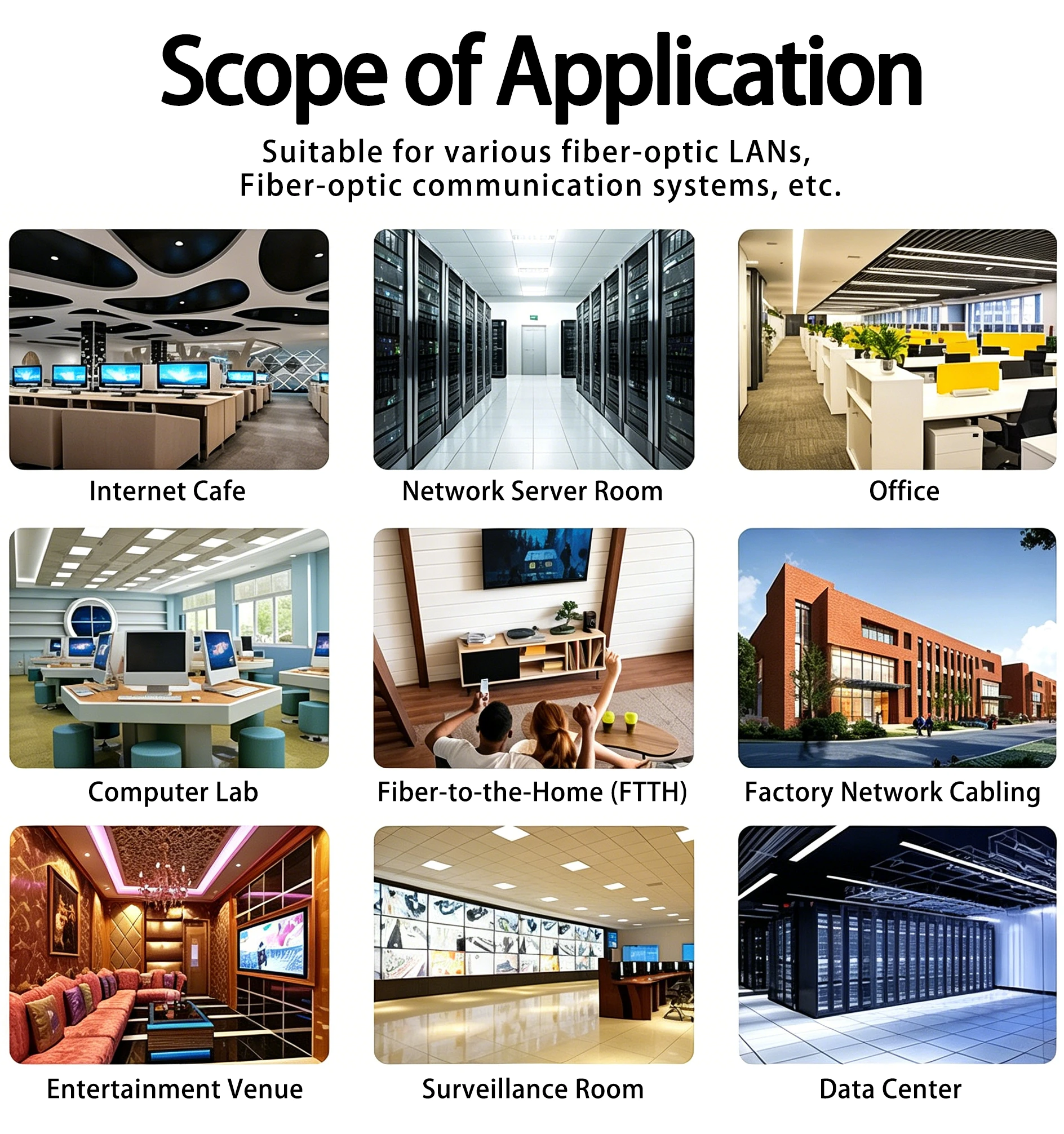
Armored fiber optic patch cords are widely used in various scenarios, including: the telecommunications sector (e.g., 5G base station fronthaul connections between AAUs and DUs, long-haul lines, and primary/secondary backbone transmission); data centers (providing flexible, durable interconnects for active equipment, passive optical devices, and cross-connects); industrial and outdoor environments (suitable for building cabling, critical equipment rooms, field operations, sensing/detection, FTTH, smart cities—such as traffic signal control and environmental monitoring—industrial automation—such as automotive manufacturing and blast furnace monitoring—offshore wind farms, petrochemical facilities, and rail transit); and other applications requiring long-distance runs and high mechanical protection, such as large-scale manufacturing workshops or floor-based routing between optical platforms in laboratories.
Armored Fiber Jumpers Detection
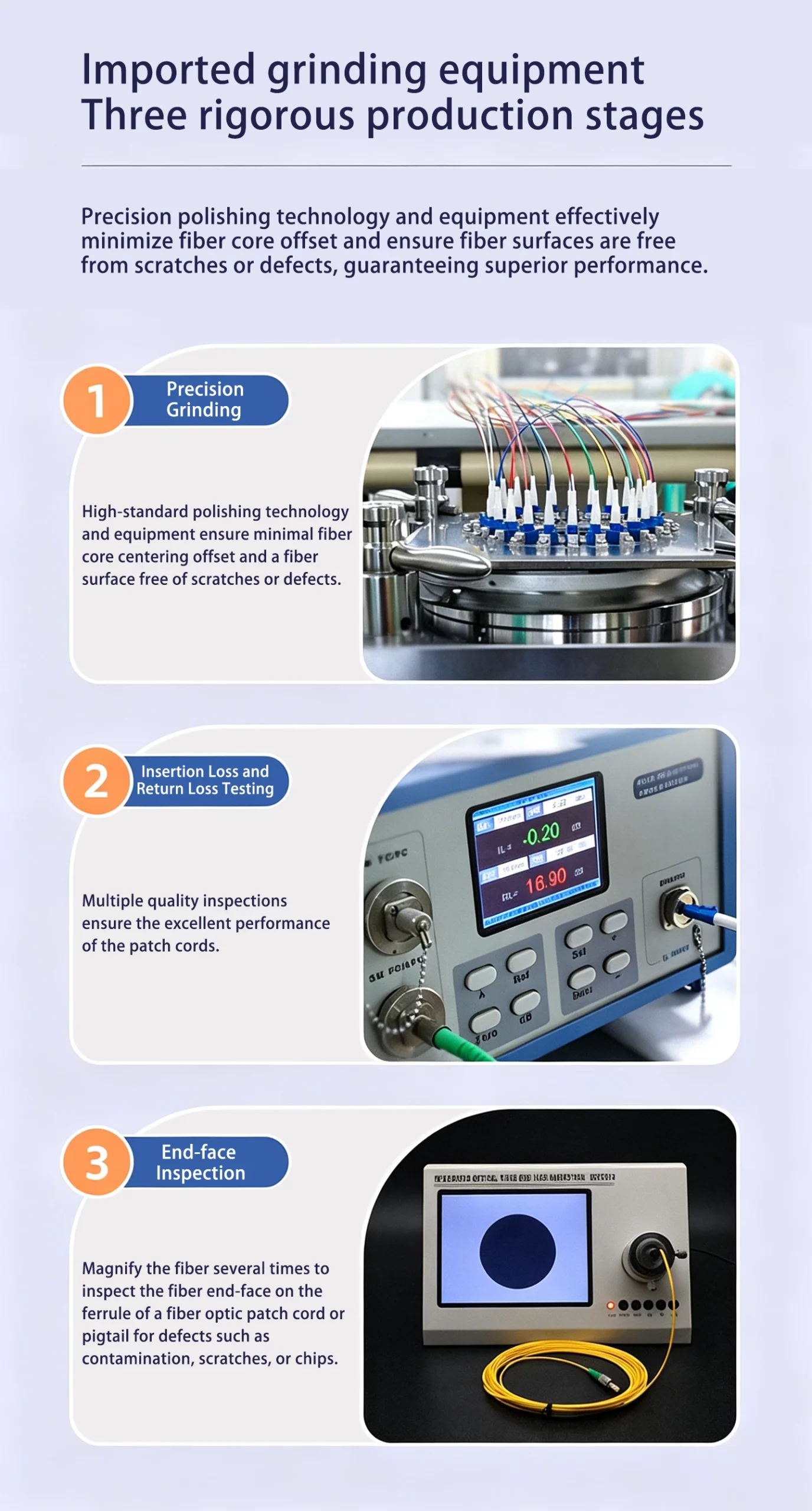
Performance testing for fiber optic patch cords falls into the following categories:
1. Optical performance testing: Includes return loss and insertion loss measurements. The FibKey 7602 integrated return loss/insertion loss tester is commonly used for this purpose.
2. End-face geometry testing: Parameters measured include radius of curvature, apex offset, and fiber height. Interferometers are used for this testing; the Norland AC/NC3000 or CC6000 models are widely adopted. The CC6000, in particular, is increasingly used in factories due to its excellent cost-performance ratio.
3. Fiber end-face scratch inspection: Video fiber microscopes are used for observation; for example, many factories use the FibView FV-400PA. This instrument provides exceptionally clear images and is extremely easy to operate. Some customers also use the FibKey-5600 variable-magnification microscope, which integrates 400x, 200x, and 80x magnification capabilities, allowing for clear and convenient inspection of both the fiber end-face and the ferrule end-face. Automated inspection using specialized software is also an option.
4. Fiber tensile testing: Measures the tensile force that the fiber optic connector can withstand.
5. Environmental temperature testing: Evaluates the performance metrics of the fiber optic connector under varying ambient temperatures.

 No products in the cart.
Reviews
There are no reviews yet.